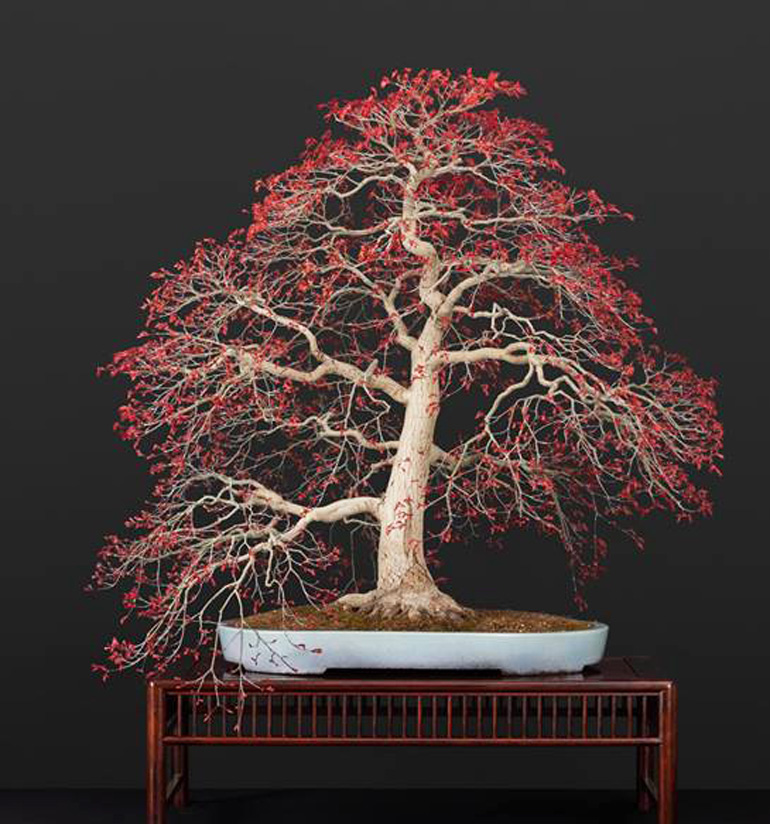
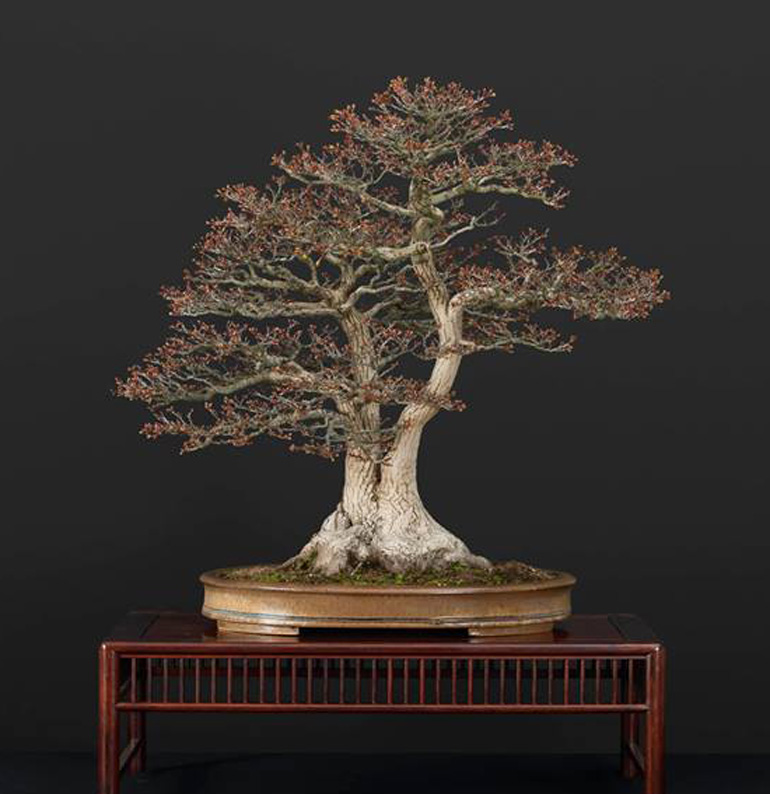
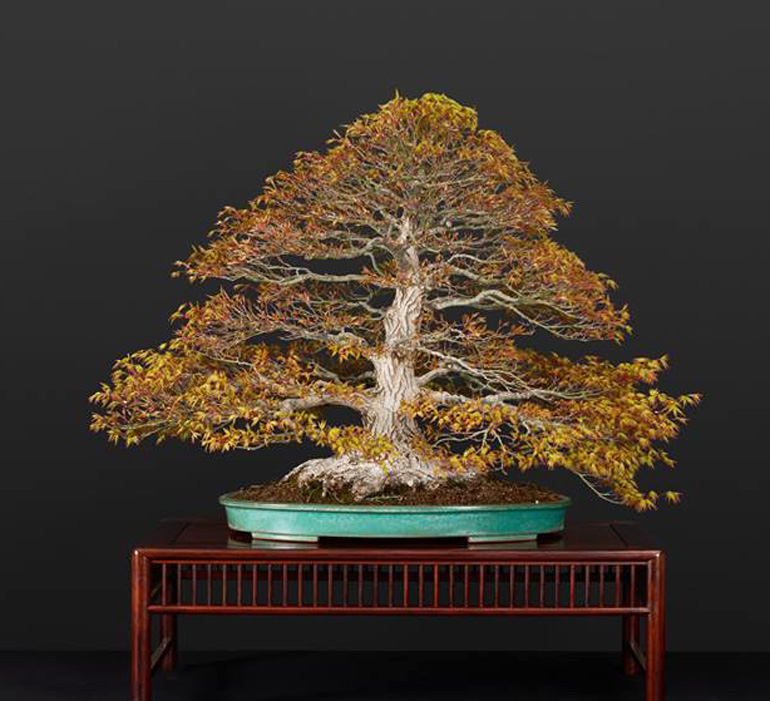
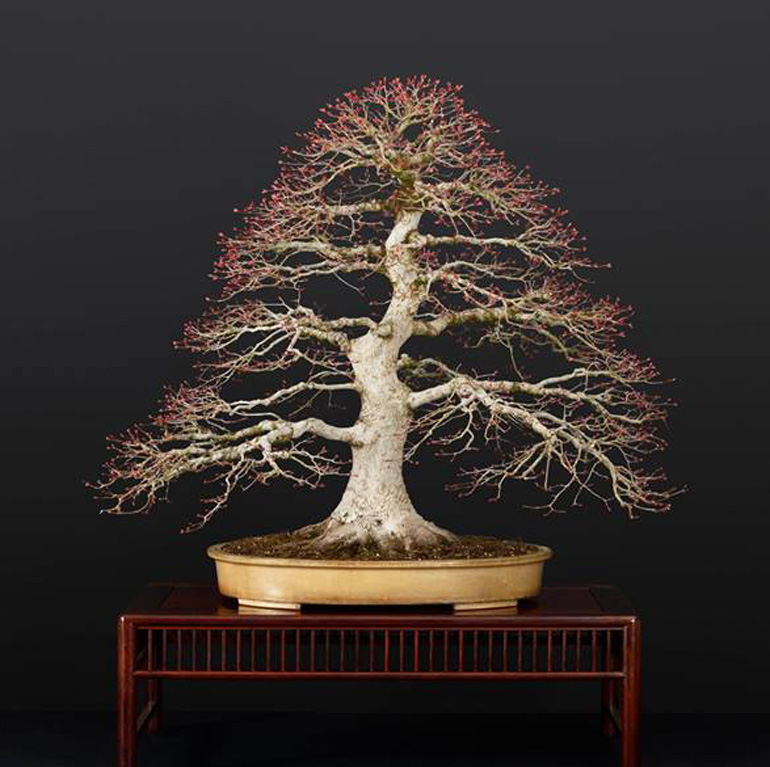
Stunning Satsuki & No Slouches

This Nikko Satsuku Azalea is from the National Bonsai & Penjing Museum’s Japanese collection. It was donated by Masayuki Nakamura. See May 25 – June 2 below for an important upcoming event at the Museum.


May 25-26: If you’re anywhere near Slovakia next weekend and you like the name ‘Tea House of Good People’ as much as I do, then this one is a don’t miss event, which judging by the photo above (especially the Juniper on the right), should feature some pretty good bonsai.


This one is a Korin Satsuki. Like the magnificent Nikko Satsuki above, it is part of the world-class Japanese collection at the National Bonsai & Penjing Museum.

May 25 – June 2: Satsuki Bonsai Azaleas of Old Japan at the National Bonsai & Penjing Museum. You are in for a treat if you’ve never been to our National Bonsai & Penjing Museum and you’re in for a special treat with what promises to be on of the most brilliant Satsuki exhibitions ever (outside of Japan at least).


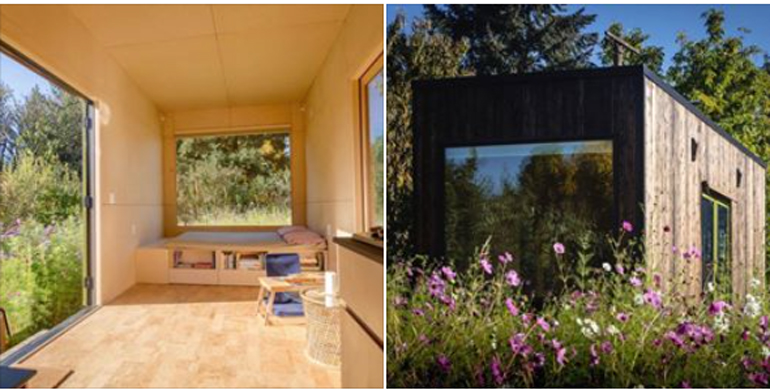
June 6– 9: International Bonsai Colloquium. It’s not often we show a photo of the inside of a workshop, but thought it might be helpful to show you where you could be working if you take one of the workshops at Bill Valavanis’ upcoming Bonsai Collogquium in Rochester NY. I strongly recommend you make the trip if you can. Bill is a treasure of knowledge and an excellent teacher and the other headliners are no slouches either.


June 7-9: Akron-Canton Bonsai Society’s Exhibition. I originally discovered this exhibition in the Columbus Bonsai Society’s Newsletter. I mention this because someone needs to sing the praise of the on-going efforts by the good people in Columbus who keep putting out their excellent newsletter month after month (even if they haven’t bothered to include Bonsai Bark in their links). And you don’t have to live anywhere near Ohio to enjoy it.


June 22-23: Tower Hill Botanical Garden Annual Bonsai Weekend. Todd and friends at Sanctuary Bonsai clued us in to this event. I’ve been to Tower Hill and it’s a great place. If you ‘re anywhere near central Mass, this should be a show worth some time this weekend.


July 13-14:  The Bonsai Society of Greater Hartford Annual Show. For those of us who are geographically challenged, Hartford is the capitol of Connecticut. If you’re still lost, Connecticut is south of Massachusetts which is just below the great state of Vermont. This means if you are anywhere in New England or New York for that matter, Hartford is just a short skip away.


July 20-21: Speaking of Columbus (see above under Akron-Canton) the Columbus Bonsai Society’s 40th Annual Bonsai Show is coming up July 20-21. Forty straight years! Someone is doing something right in Columbus (except for that missing link).


Imperfect photos of great bonsai are not that unusual. In this case, part of the problem is that I blew it up to about twice the original size. The other part is the trunk is too dark; but when bonsai are in bloom it’s about the flowers anyway. This is yet another stunning Satsuki azalea that will be on display at the Satsuki Bonsai Azaleas of Old Japan at the National Bonsai & Penjing Museum. See May 25 – June 2 above.


The only English language Azalea bonsai book in print.

Posted in Bark, Cuttings | Tagged , , , , , , , , | 4 Comments

Wire: What’s the Difference?

Like most bonsai, this one has been wired. In fact, there’s visible wire on it right now. It’s a Shimpaku that’s from a chapter in our Masters’ Series Juniper book, titled Keiko Tamaki’s Deft Touch.

Most bonsai are wired at some stage in their development. In fact, bonsai that have been around for a long time may have been wired repeatedly over the years. There are very good reasons for this, not the least of which is, it is often very difficult to get decent results without wire. There’s much more that be can said about this but we’ll leave that for another time.

Anodized aluminum wire is by far the most popular type of wire for bonsai, at least here in the Western world (the other choice is copper wire). We sell both Japanese (Yoshi brand) and Chinese (Bonsai Aesthetics brand) anodized aluminum wire and, as a result, we get plenty of question about the difference.

Put simply here’s the difference: Yoshi wire is a little stiffer than Bonsai Aesthetics wire. Stiffer means slightly more difficult to use, but a little better holding power.

However, holding power versus ease of use is not the whole story. There are at least two other things to consider: the price and the type of tree you are working on.

When it comes to price, Bonsai Aesthetics wire is hard to beat. It’s such a good deal that even though you have to use slightly heavier wire to get the same holding power, you still save a considerable amount of money.

Types of trees can be broken down into four very general categories: conifers, deciduous trees, temperate zone broad leaf evergreens and tropicals. We’ll just skim the surface here and maybe dig a little deeper in future post.

Most conifers require stiffer wire than other trees, so copper works quite well (it’s strongest of all and very good for heavy branches). However, many people eschew copper wire for the ease and lower cost of aluminum. If you do use aluminum you’ll need a gauge that is quite a bit thicker than the gauge for copper.

Deciduous trees are usually wired with aluminum as are most temperate zone broad leaf evergreens trees. Either Yoshi or Bonsai Aesthetics will work depending on the size of the branch and your preference.

Many types of tropicals are seldom wired, if at all. If you do have a tropical that you’d like to wire, we recommend Bonsai Aesthetics aluminum wire. This is in part because tropicals grow so fast (especially when they’re in the tropics) that you’ll be taking it off not long after you put it on, so why spend the extra money?

At this point, I’d be well-served to borrow Michael Hagedorn’s disclaimer: “There are plenty of exceptions to everything I just said, which naturally makes blogging about bonsai a total disaster.”


One good reason the best Japanese bonsai looks more refined than most Western bonsai is because Japanese bonsai artists wire all the way out to the tips of the smallest twigs.


Once the wire is on (copper in this case) it’s time to bend. This photo and all the others in this post are from our Masters Series Juniper book.


Another good use for wire. If you want to prevent future mishaps, both small and large, it’s an excellent idea to wire your tree into the pot.

This lovely Shimpaku on the cover of our Masters’ Series Juniper book has no doubt felt the bite of wire. The book lists at 29.95 and is now 19.95 at Stone Lantern.

Posted in Bark, Cuttings, Styling | Tagged , , , , , , , , | 2 Comments

Bonsai Conspiracies

This strange and wonderful monster resides at Ryan Neil’s International Bonsai Mirai, but the photo is from Aarin Packard’s Capital Bonsai blog. Most of Aarin’s posts are from the National Bonsai and Penjing Museum, but this one is from a recent visit to Bonsai Mirai.

Conspiracies? I probably should have titled this ‘what happens when bonsai artists visit each other’ but my guess is Bonsai Conspiracies got your attention. No matter, it was inspired by four notable bonsai artist/bloggers getting together (in two sets of two).

Artisans Cup postponed until 2015. There’s another theme at play here; two of artists featured in this post work and live in the Portand Oregon area (Michael Hagedorn and Ryan Neil), and, as it turns out, both Michael and Ryan are prime movers of the Artisans Cup. So this seems like a good time to mention that the Cup has been postponed. It was originally scheduled for the fall of this year but has been rescheduled for the fall of 2015. I’m a little disappointed, but I think it will be well worth the wait.

This is a Douglas fir that belong to Ryan Neil. You don’t see that many Douglas fir bonsai so I got a little excited when I saw this one (Doug firs are among the tallest and most magnificent trees in the world). The photo was taken by Aarin Packard on his visit to International Bonsai Mirai. Aarin’s original might be a better photo, but I wanted to get a little closer for more detail so I cropped and enlarged. My apologies for the fuzzy effect.


This is from one of two Bonsai Tonight posts on air-layering a Hinoki (here’s the other). It’s actually Michael Hagedorn (Crataegus Bonsai) doing the work and Jonas Dupuich (Bonsai Tonight) taking the photos (Michael was visiting Jonas). One reason I wanted to show you this is what Jonas wrote about this poking technique “Michael then poked holes on the lowest part of the bark just above the layer line as an additional technique to stimulate new roots.” I must confess that I didn’t know about this and I’ll take a wild guess that maybe one or two of you were equally ignorant (no offense intended).


Here’s another tree that you don’t see very often. It’s a Texas cedar elm (Ulmus crassifolia) that’s from this years’ American Bonsai Association Sacramento show. The photo is from Bonsai Tonight (it has nothing to do with Michael’s visit).


When the sun came out this morning, I remembered why I live in Vermont. This iPhone photo is from my backyard and has nothing to do with today’s theme.


Posted in Cuttings, Growing Season, Styling | Tagged , , , , , , , , , , , | 6 Comments

Forever Young? How Not to Fertilize

You can bet that this Japanese black pine  (Pinus thunbergii) was fertilized with a master’s touch. Speaking of masters, this photo is from our Masters’ Series Pine Book.

An American bonsai pro on fertilizing. Whenever Michael Hagedorn writes, I read, and though I am a little reluctant to tell others what to do, you might want to consider it too.

Here’s a part of Michael’s latest post on his famous Crataegus Bonsai blog: “For fertilizing bonsai, we can make this one basic distinction: Begin fertilizing a young, unrefined tree when it begins growing early in the spring
Wait a bit with an older, refined tree—usually begin fertilizing when it’s just hardening off it’s spring growth…

Quiz: If we were to fertilize everything the same, strongly, starting early in the year, what would happen?
The young trees would stay forever young
The old, developed trees would become young again.” Here’s the rest of Michael’s post.

Black pines? This post has expanded beyond just fertilizing to include needle reduction on Japanese black pines. It’s just a fortuitous accident; Michael references cutting candles (needle reduction) on Black pines in his post and we needed images for this post, so why not?

My two cents. Michael doesn’t talk about which fertilizers he uses, so… in my experience, fertilizers that promote soil health are the best. This means somewhat mild organic fertilizers are usually preferable. Slow release is good too. Also, I think mixing (or alternating) two or three types of fertilizers works best. While we’re at it, I suppose I should fess up with a disclaimer (we sell fertilizers), otherwise my oft-tested credibility may go south.

There’s plenty to say and show about needle reduction on Japanese black pines and these illustrations provide only part of the picture. For the whole picture, check out our Masters Series Pine book (all the images in this post, including this one, are from this book).


A part of a Black pine right after completing needle reduction.

Usually, when we think of Japanese black pines, we think of larger bonsai. However, with good needle reduction, smaller Black pines can work too, as attested to by this photo and the one at the top of the post. Both are from our Masters’ Series Pine book.

Posted in Bark, Cuttings, Growing Season | Tagged , , , , , , , | 2 Comments

Keeping It Close to Home – Upcoming Bonsai Events

This Shimpaku is from the home page of the Suthin Bonsai Studio website. Though magnificent Shimpaku are pretty common (especially in Japan), still, this one is distinctive in at least a couple ways: the lush crown that reaches all way down to the right gives the tree a dynamic flowing movement that adds interest, but just might cause your eye to flow right off the page. But then there’s the irrepressible curlycue jin that serves, among other things as a counter-balance to the crown’s lean to the right and brings your eye right back (too much coffee this morning is my excuse). Suthin will be hosting a tour and workshop at his Royal Bonsai on July 21st (see below).

Keeping it close to home. We didn’t intend it this way, but it turns out that the events here are all in the Eastern U.S. (Columbus might consider itself Midwestern, but if you look at a map you’ll see just how ridiculous that is). Next time we’ll try to feature events from other parts of the U.S. and from around the world, but we need your help…

…Don’t see your event here? Stick it (preferably with a link) in the comments below and we’ll do something about it.

May 18th: The Bonsai Society of Southwest Florida is holding its Annual Auction and Spring Picnic on May 18th at Wigert’s Bonsai Nursery.


June 6th – 9th: International Bonsai Colloquium. The photo above is a page from Bill Valavanis’ International Bonsai Magazine. Bill is one of the many prominent headliners at his upcoming Bonsai Colloquium, June 6-9 in Rochester NY. This photo offers a quick glimpse into a very small piece of Bill’s bonsai knowledge and his ability to make that knowledge accessible to the rest of us.

July 13th – 14th: Bonsai Society of Greater Hartford Annual Show. I know information on this show exists somewhere, but all I could find on their website and facebook was their 2012 show.

July 21st: Suthin Sukosolvisit’s Royal Bonsai Garden tour and workshop. I couldn’t find it on Suthin’s Bonsai Studio website, but it did turn in the Bonsai Society of Great Springfield’s calendar. The tree at the top of the page belongs to Suthin.


July 20th – 21st: The Columbus Bonsai Society’s 40th Annual Bonsai Show is coming up July 20-21. Forty straight years. That’s impressive. Someone is doing something right in Columbus. And speaking of being impressed, they’ve also been cranking out excellent newsletters for a long time.

July 21st: Suthin Sukosolvisit’s Royal Bonsai Garden tour and workshop. I couldn’t find it on Suthin’s Bonsai Studio website, but it did turn in the Bonsai Society of Great Springfield’s calendar. The tree at the top of the page belongs to Suthin.

Posted in Cuttings | Tagged , , , , , , , , | 2 Comments

A Magical Land Where Almost Every House Has a Bonsai

We know this tree is very large, but exactly how large is difficult to tell (the uncropped photo immediately below might help a bit). In addition to its great size, it shows an excellent base and nebari, as well as some gnarly bumps that look a bit like melting wax. I think I can say with confidence that it’s Ficus. All the photos in this post were taken by Robert Steven on a recent trip to Vietnam.

Robert Steven seems to teach and travel almost incessantly, and yet he still finds time to write about bonsai, run Bonsai Aesthetics (his bonsai business) and of course, to work on his own trees. He also is one of the most responsive email communicators I’ve ever known and seems to have a nearly infinite number of students and friends that I imagine he also communicates with… which begs the question; when does he sleep?

Anyway, based on something Robert wrote in the comments of a previous post (in response to another comment), I decided to do a post on bonsai Vietnam. As I was just starting to search for photos, I received an email from Robert about an unrelated piece of business. When I responded, I asked him if he had any photos of Vietnamese bonsai, and presto, here they are.

So, sticking with the Vietnam via Robert theme, here is what he has to say about bonsai in Vietnam (from the aforementioned comments on a previous post): “I have been traveling frequently to Vietnam recently for lectures and demo. Vietnamese bonsai is progressing extremely fast during the last few years in parallel with the growth of economic and living standard.

The interest in bonsai in Vietnam is amazing and unbelievable. I travel from the south of Ho Chi Min City to the north of Hanoi, from the remote villages to the cities, every house with terrace (when I say every house, I mean ALMOST every house) always has bonsai.

The styles in the south and the north are totally different. The south (around HCM city) likes the landscape..specifically the water and land penjing and other deciduous species e.g. Wrightia and they don’t like ficus. In the contrary, in the north, they like BIG bonsai, specifically ficus.

They have their own style of ficus with wild aerial roots with unique pots. In few years, Vietnam will certainly be on the world bonsai map with the ficus as their icon..they still need some times to improve their technique in forming ideal ramification.

Another amazing thing is their involvement in the internet because they are mostly young people. They have an internet forum similar to IBC..and you won’t believe that there are always few thousands members online each day. If they didn’t have the language barrier, I believe IBC forum will be dominated by Vietnamese members.

I receive dozens of friend requests from Vietnam each day although they don’t speak English, otherwise…”


The king and his court (the queen and her court?). This uncropped version of the photo above offers a little more perspective.


Can you imagine owning a tree like this (or even pot like this for that matter)? If you could get your hands on something like this, you’d have to have a greenhouse or a large sun room (unless you live in the tropics). BTW, you might notice that the tree appears to be surrounded by a moat of water, which means it’s growing in almost no soil. You might also notice that it has a couple little people perched on a stone (there’s a building on the other side too). And then you might take a step back and notice just how spectacular and just how huge this remarkable planting is.


Here’s another one with a moat. The moat’s little empty now, but never mind, both the tree and pot are still spectacular.


A little perspective doesn’t hurt. That’s Robert wedged between a very large bonsai and a Vietnamese friend.

Posted in Bark, Cuttings, Styling | Tagged , , , | 11 Comments

Dragon 3

Highly distinctive, exceptionally powerful and almost grotesque. When I first glanced at this tree, there was just a massive trunk with great taper and one of the largest sabamiki (the hollow in the trunk) ever. Then the face appeared (purely a mental projection by the way). I think the solution to this dilemma is to relax the gaze and take in a the whole tree and the space around it. Or simply don’t bother projecting.

The photos of the trees that Robert Steven sent from the recent BCI convention in China are so good that they’re worth a third post (here are the first and the second). Before going any further I’d like to apologize to Robert for cropping some of them. It’s just about reducing background noise (it’s surprising how casual some of the displays are; check out the contrasting photos of the large Penjing tray planting below).


This has to be one of the most magnificent Penjing tray plantings ever (and there are lots of good ones out there). The uncropped original is just below.


The uncropped version. The judging part of the show must have been over when Robert took his photos.


You may have noticed this style bonsai lately, with the long straight trunk capped by a flowing apex and branches (my guess is that it’s from Taiwan). And then there’s that background that enhances every photo and is particularly strong in this one.


It might look easy, but the artistry required to create something so compellingly natural is a rare and wonderful thing.


Here’s an unusual winter-boned tree for you to contemplate.


Robert Steven with his custom grinder. This powerful tool is now available at Stone Lantern (with or without a 220 to 110 transformer).

Posted in Bark, Cuttings, Styling | Tagged , , , , , , , , , , | 5 Comments

Artisans Cup Postponed

This Rocky Mountain juniper (Juniperus scopulorum) belongs to Ryan Neil. The photo is from Ryan’s International Bonsai Mirai website.

A guest’s guest post. The following is from Michael Hagedorns Crataegus Bonsai blog.

Artisans Cup postponed until September 2015

This is a guest post by Ryan Neil. I am in full support of his words here:

Over the past fourteen months of research and planning the potential of the Artisans Cup has been a driving force in our bonsai community to grow and improve the level of our trees. The enthusiastic response of the entire Western bonsai world fueled our ambition and helped shape and even evolve the Artisans Cup team’s own concept of the possibilities for such a show. The project was daunting from the beginning, but we’ve all grown learning just what it takes to put on an event of this scope and size, and to stay true to our vision of bringing bonsai into the public eye in a premier venue such as the Portland Art Museum.

We are truly grateful for the enthusiasm of the bonsai community and the encouragement you have all given over the past 14 months. And throughout the process and the many challenges we have encountered along the way, I find myself more motivated than ever to realize this exhibition. I believe I have been able to convey to so many folks around the country and the world that the Artisans Cup has the capacity to expand the awareness and level of bonsai in North America, to reach a new audience heretofore unaccustomed to experience living sculpture in the context of the Art Museum. Bonsai should be acknowledged as a vibrant and life affirming art form, rich in tradition but provocative and relevant to our contemporary culture.

However, despite my best efforts to accumulate a critical mass of backing to move our show forward, the state of the economy and the timing for such a show is still early. It’s clear that the Artisans Cup needs more time to gain momentum and support in the Pacific Northwest, as well as to raise the funds necessary within the bonsai community to make the show possible.

For once in my life I’m realizing the truth behind working smarter and not just harder. I see I will need the time to garner more support. As a result, we have made the decision to postpone the Artisans Cup until September 26th-28th, 2015. (Continued here…)

Chojubai quince from Michael Hagedorn’s collection. Michael wears his love for Chojubai on his sleeve. As you can see, his love is requited.

Posted in Cuttings | Tagged , , , , , , | Leave a comment

Dragon Ascending

What appear to be roots growing out of a long hollow on the side of trunk, creates a very unusual and fascinating effect. The rest of the tree isn’t half bad either and the flute player adds a playful human quality and contributes to a sense of vastness. The photo, which is courtesy of Robert Steven is from the recent BCI convention in China

This post, like the previous post titled BCI: Bonsai Strong, shows more of Robert Steven‘s photos from the recent BCI convention in China. As you may know, in addition to being a great bonsai artist, Robert is also an expert on bonsai and bonsai history, with a strong bent towards Chinese bonsai and penjing. Here’s what he wrote about Chinese bonsai in the comments to the aforementioned post (squeezed into native speaker English by yours truly) “Chinese bonsai has seen amazing progress the last 15 years, but it wasn’t very well exposed till the last few years (through aggressive international events). They are coming out with very creative and refreshing designs, and ideas present no limits for them. At the same time, I dare to say the Japanese are in stagnation. I anticipate a change in worldwide bonsai orientation that will turn to China…”

One thing I noticed about the pines in the previous BCI post, is how much they seemed to be influenced by Japanese bonsai while at the same time being quite unique, not to mention extraordinarily powerful. On the other hand, the broad leaf trees in this post seem much more Chinese to my eyes. That’s not to say that they don’t express new and exciting ideas (they do), just that they also reflect a very traditional Chinese style. This is especially true of the tree above and the last three trees below

Something else you might notice about the trees shown here is that every one of them has a figurine, while non of the pines shown in the previous BCI post have any.


This large bonsai (with blue watering can) features another fascinating trunk. Though it’s impossible to tell (for me at least) the leaves look like they might be azalea.


Even though they are broad-leaf trees, their towering vertical thrust is reminiscent of a conifer grove high in the mountains of the western U.S.


Windswept bonsai with hitchhiker. This one reminds of some of Robert’s trees.


The big guy almost looks like a rock. Nice tree too.


At the risk of getting carried away, how about ‘wandering sage stops for a moment to contemplate an ancient tree by the light of the moon.’  In any case, I don’t blame him. You don’t see trunks (or trees) like this one every day.


Here’s the whole photo.

Posted in Bark, Cuttings, Styling | Tagged , , , , , , | 8 Comments

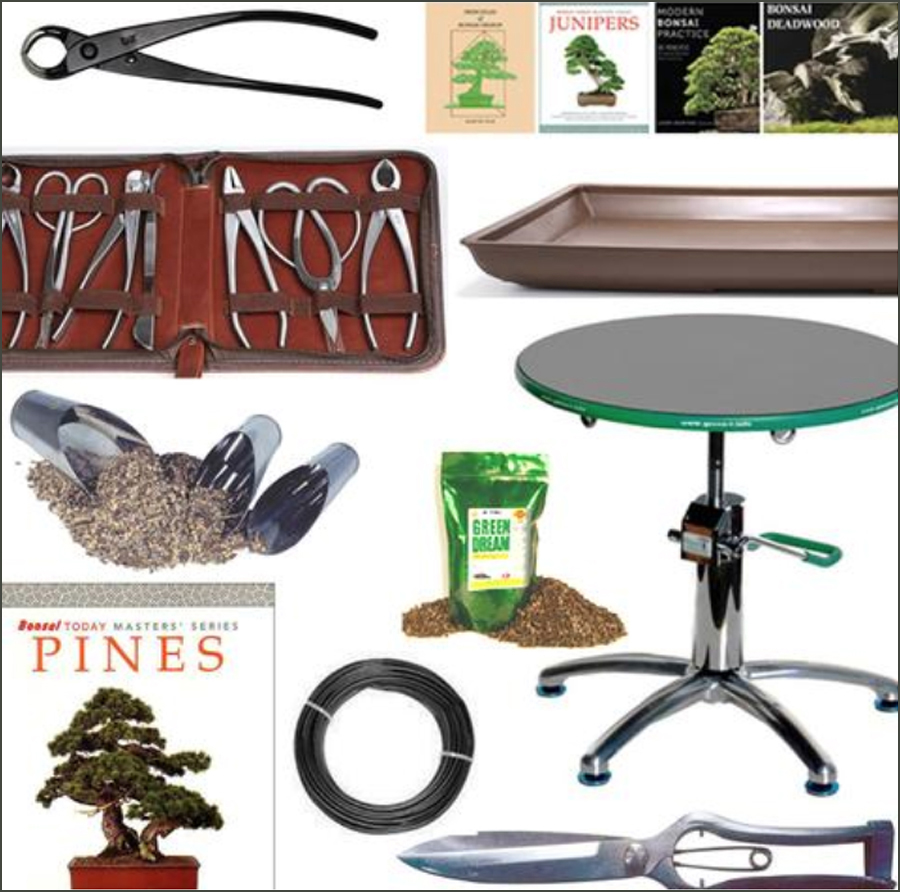
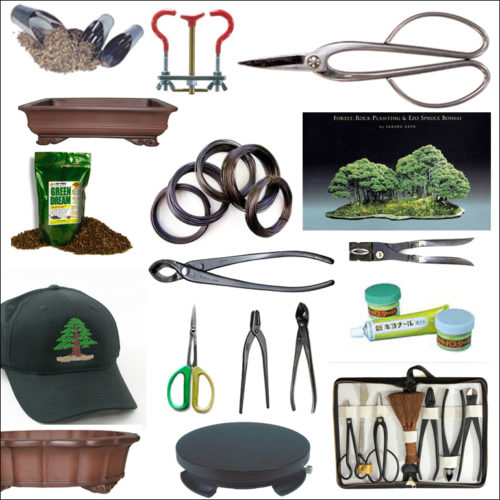
Trim, Wire, Feed, Transplant, Enjoy

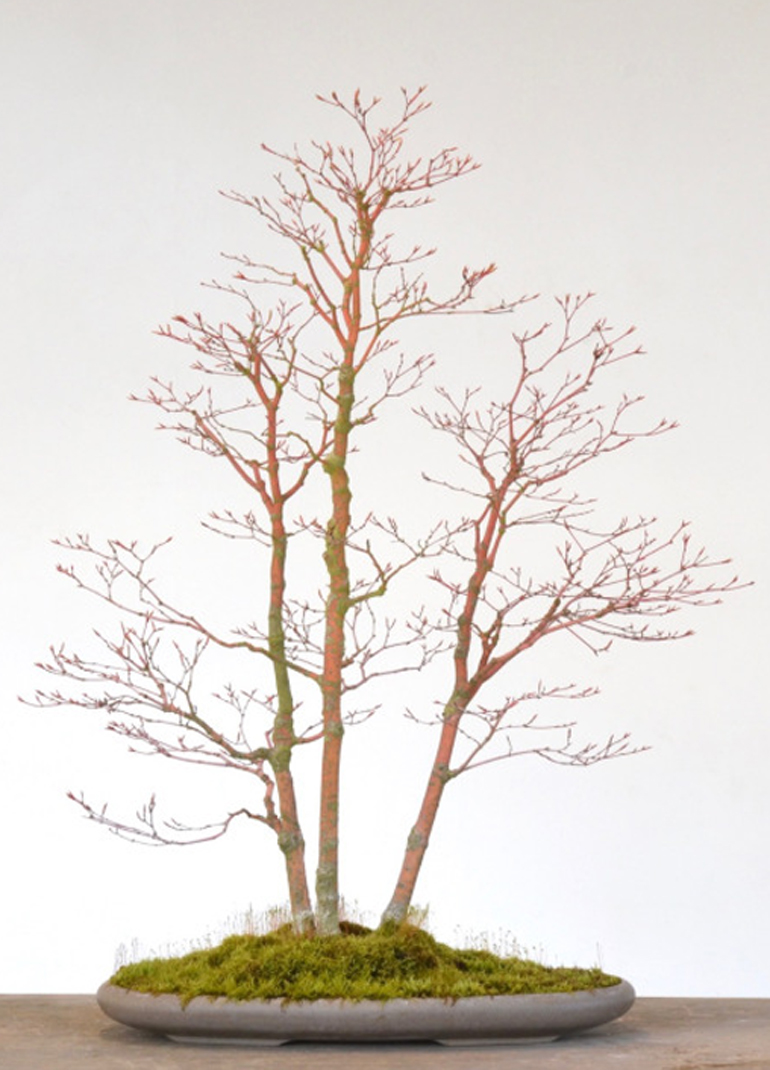
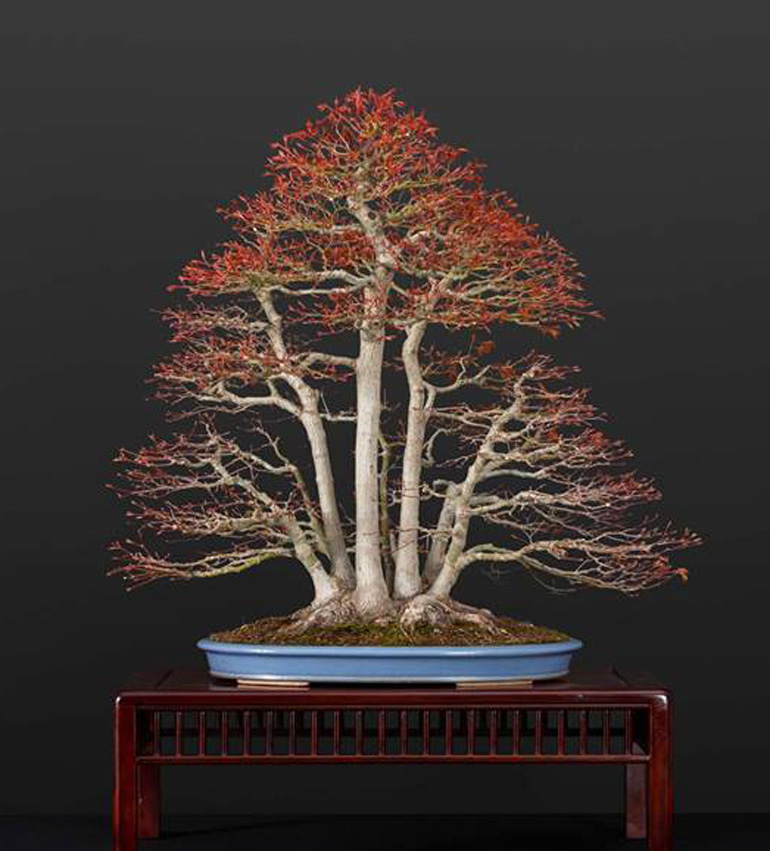
Trident maple forest from Bonsai Today issue 14. Back issues of Bonsai Today are 75% off.

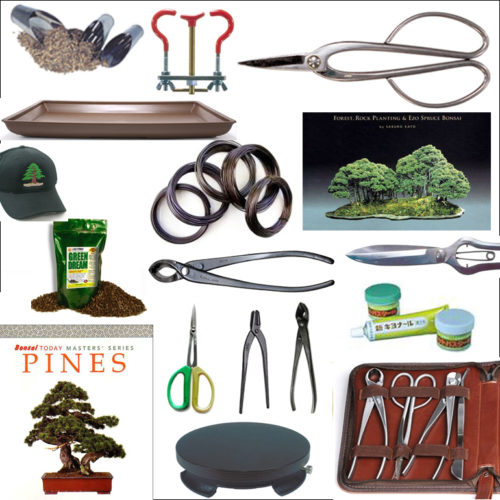
We don’t often use Bonsai Bark to advertise our products, but in this case, because so many of you have been waiting for our Bonsai Aesthetics wire, we’re making a somewhat rare exception.

Our famous and enormously popular Bonsai Aesthetics wire is back, and, as always, the prices are unbeatable.

1 Kilo rolls are from 14.80 to 18.50 each depending on how many you buy, and 100 gram rolls are from 2.36 to 2.95 also depending on how many you buy.

Roshi Bonsai Tool sale. And while we’re at it, a friendly reminder about our 20% off sale if you buy two or more Roshi tools. Even without this sale, Roshi tools are simply the best for the price. In fact, you might expect to pay twice as much for such high quality.

Just a few of our large selection of Roshi Bonsai tools

While we are at it, don’t forget the health of your bonsai.

The complete set of Ho Yoku Bonsai Care products


Transplanting essentials

Posted in Bark | Tagged , , , , , , , , , , | Leave a comment
  • ad1

  • ad2

  • ad3

  • ad4

  • ad5