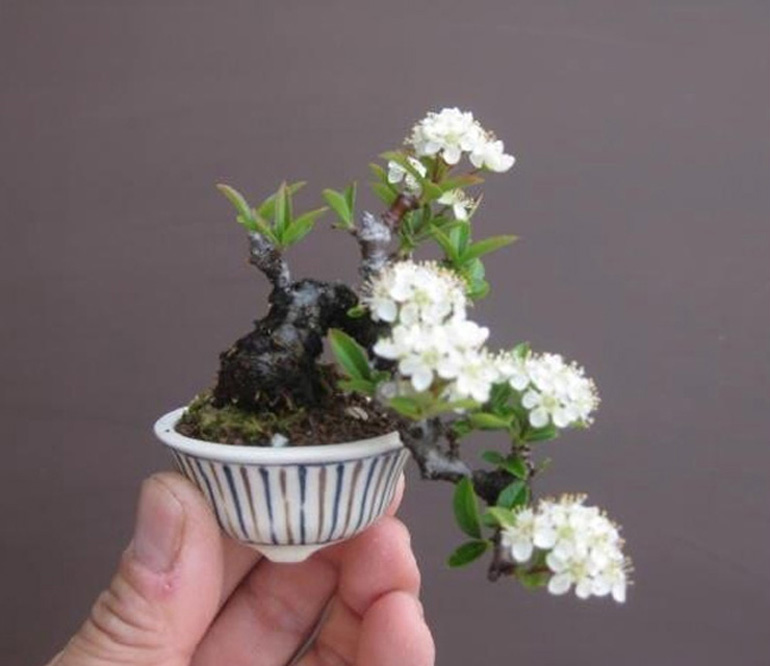
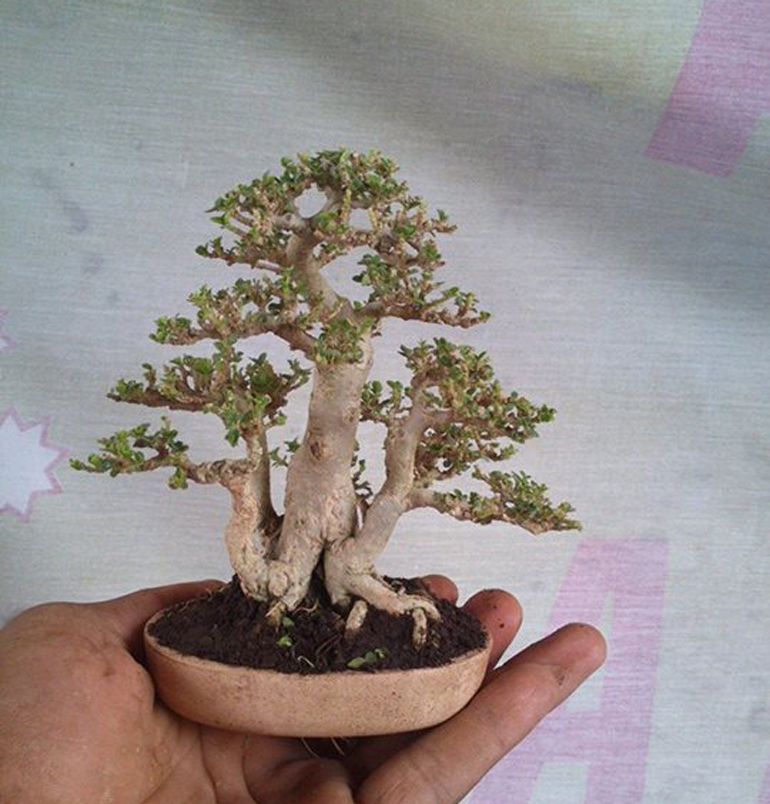
 I think this one qualifies as Mame (‘bean’ in Japanese). Bonsai-wise, mame is a common word for the very smallest bonsai. When we originally posted this, I didn’t know who this lovely little bonsai belonged to. I’ve since been told that it is a Haruyosi tree. Strange how once you know something it’s obvious. And btw, the sweet little pot was no doubt made by Haruyosi as well. Oh, and I’m pretty sure the tree is a Pyracantha.
On the road again (and out of the bone chilling cold for a precious minute) so we’ll go archiving once again. This one was originally posted in November, 2013.
“Shohin are small bonsai. When compared to large bonsai, shohin cost less, take less time to develop, take less space, are easier to move, and are less apt to be overwatered. Perhaps best of all, shohin-bonsai are a delight to behold.” From the back cover of Morten Albek’s Shohin Bonsai, Majesty in Miniature (copy written by yours truly back in the days when we used to publish books).
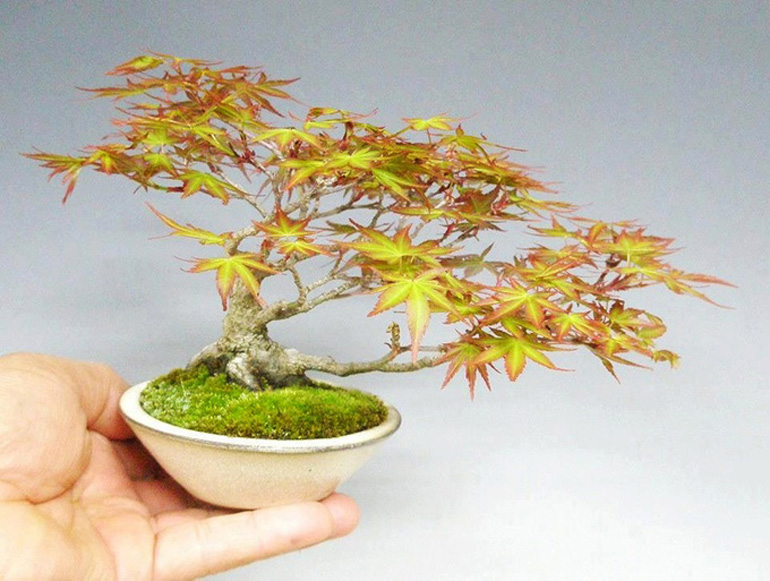 I love the uncontrived free flowing feel of this little Japanese maple. I don’t know who it belongs to, so if you know anything about it, please let us know (in the comments).
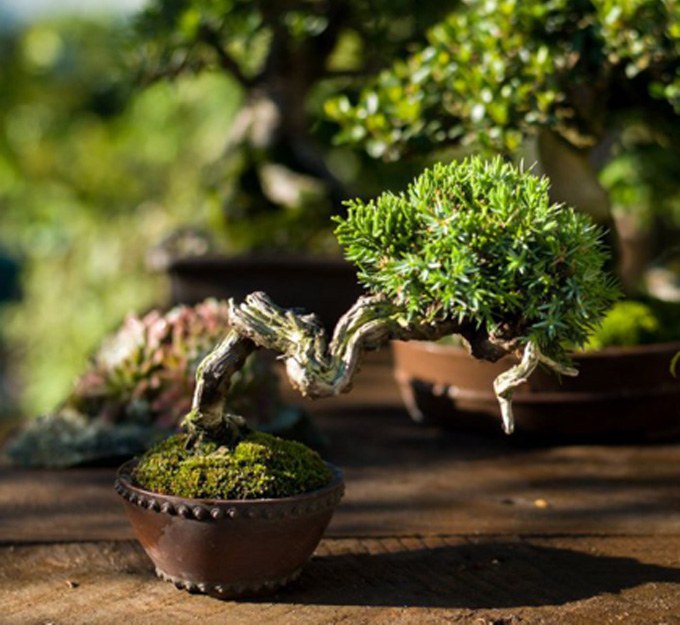 One of Morten Albek’s wee wonders. Of all of Morten’s trees that I’ve seen, this has to be one of the very best. Perhaps Morten has a shot somewhere without any background noise (not to argue with Morten’s photography, which happens to be great… just that it would be nice to see a formal shot as well as this more artistic type shot).
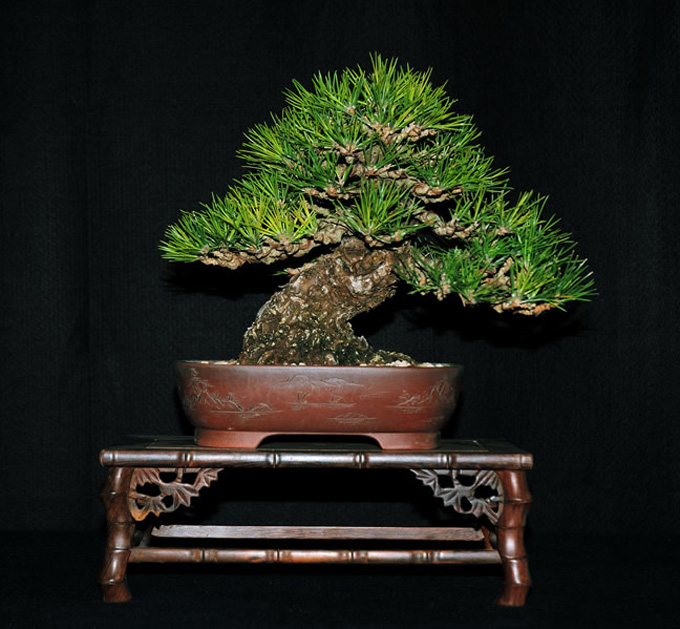 I found this fat-trunked little Japanese black pine, with it’s excellent burnished Tokoname pot, in Bonsai Smiths gallery. Turns out we featured them a couple months in a post about Redwoods (and, the more I look at this tree, the more familiar it looks and the more I think we may have featured it in one of our approximately 700 other posts to date).
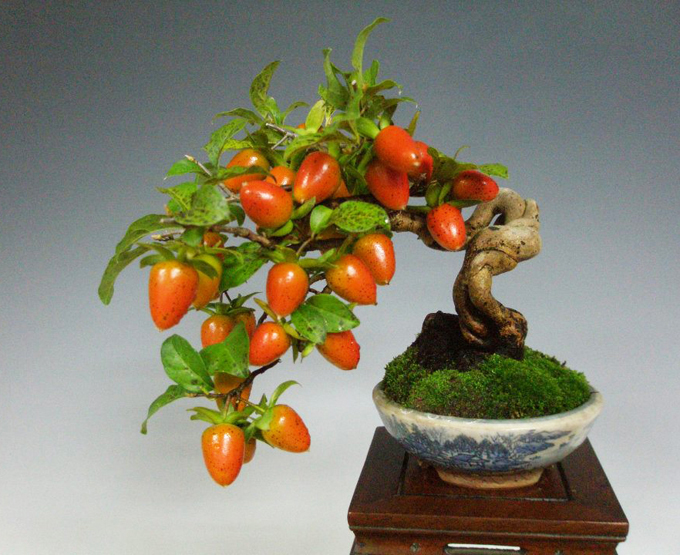 This brilliant little Persimmon (Daisuke variety, identified by Ryan Bell, Japanese Bonsai Pots Blog) is a bonsai that pops up all over the digital place. I think we’ve shown it at least three, if not four times here Bark.
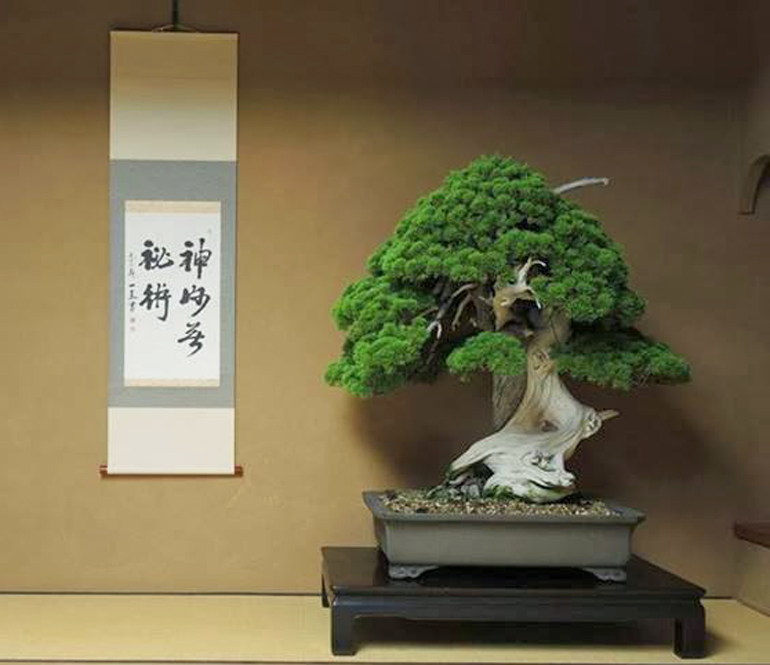
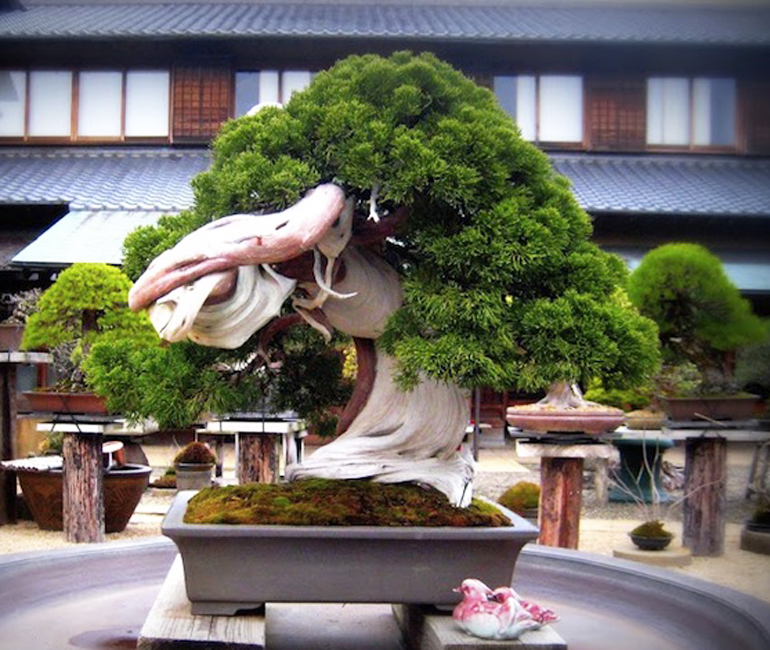
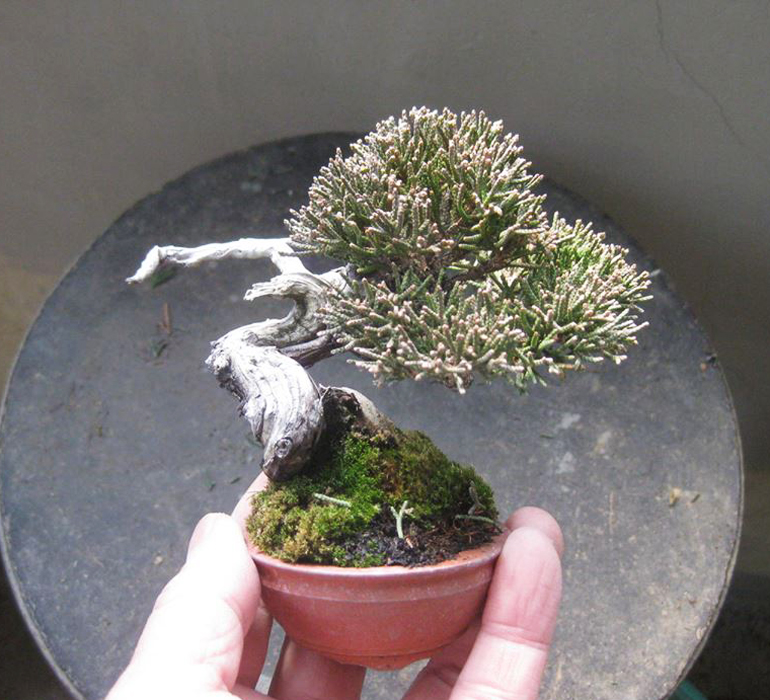 Five of Haruyosi’s fingers and one of his seemingly infinite supply of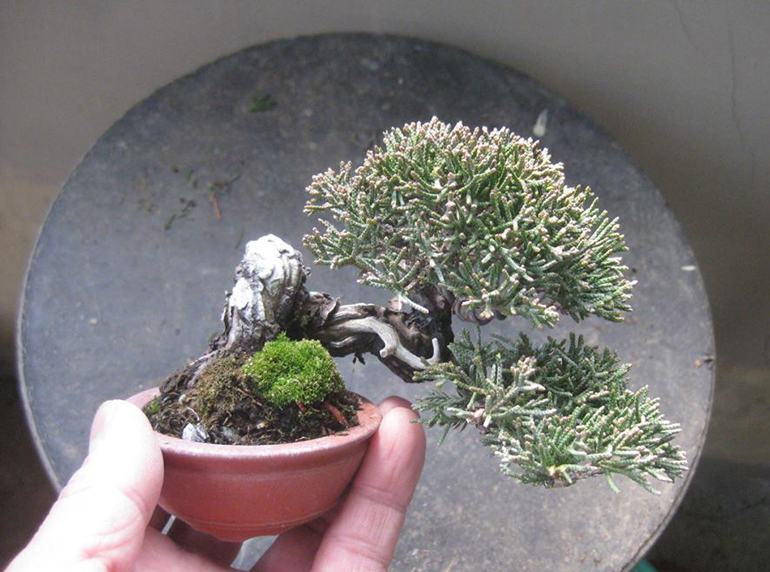
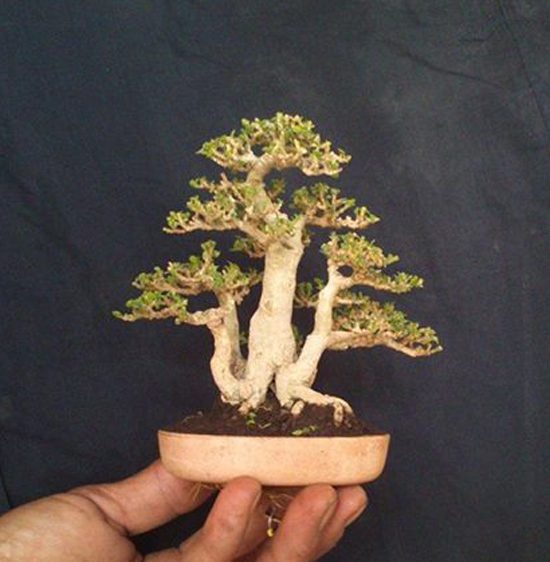
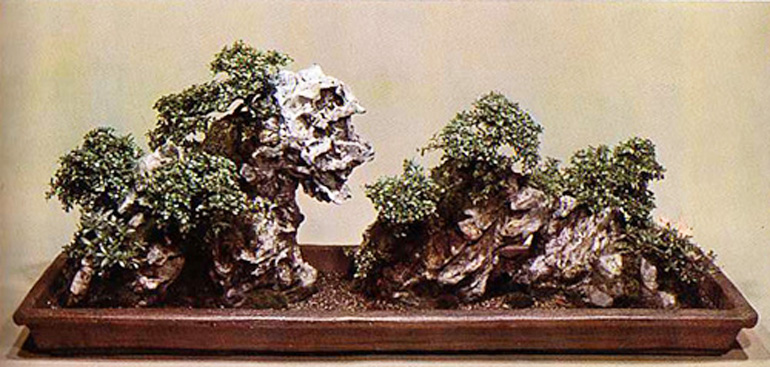 My apologies for the fuzz.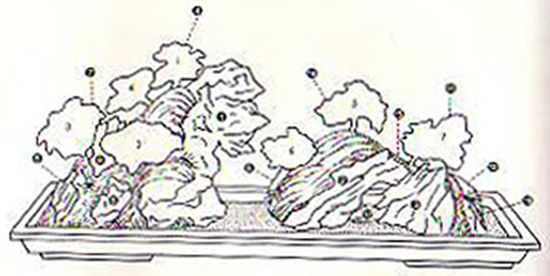
 Bird’s eye diagram. This shows what looks like two rocks are actually fifteen joined together.
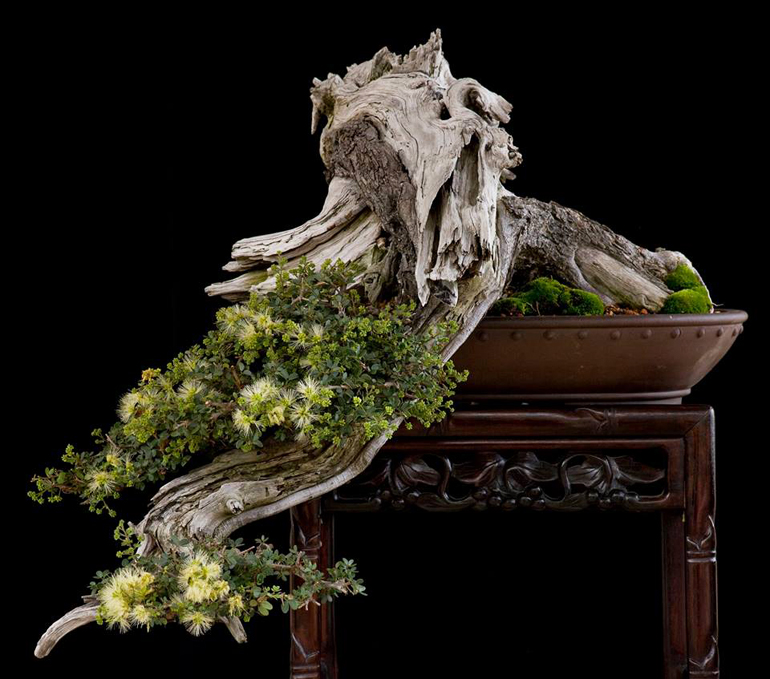
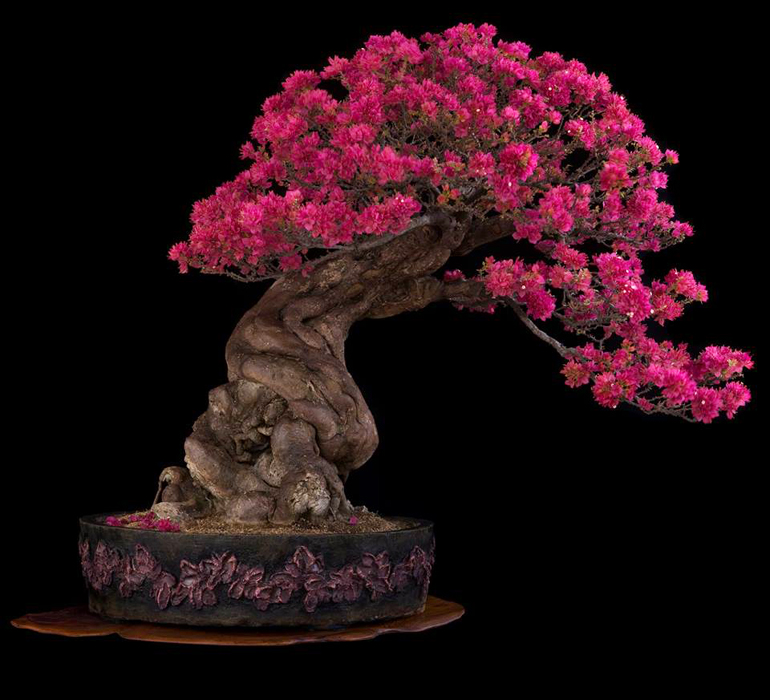 A fascinating trunk with an almost grotesque piled-up-on-itself look. And then there are the flowers (actually bracts, a strange thing about Bougainvillea).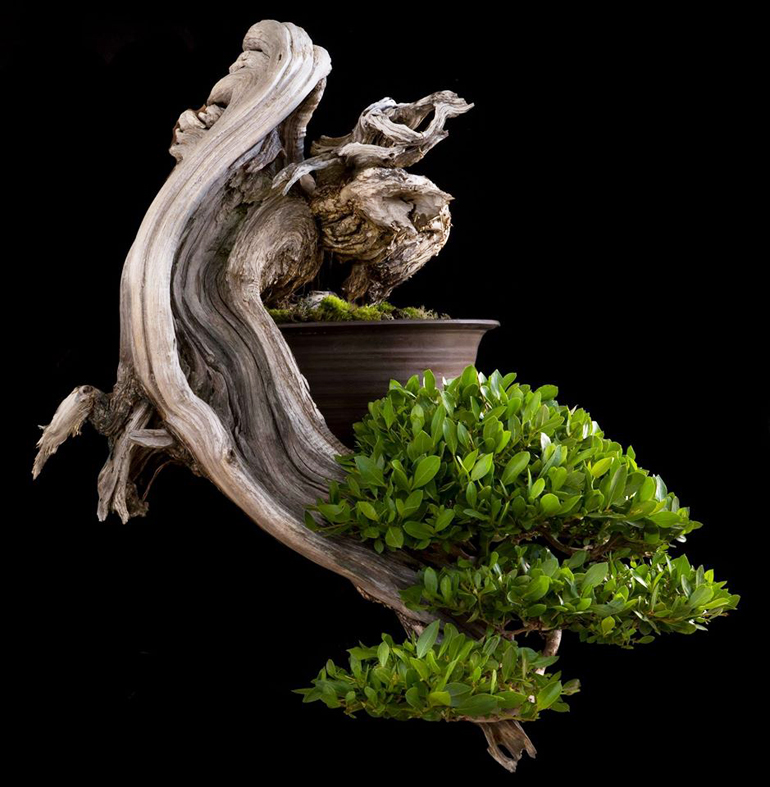
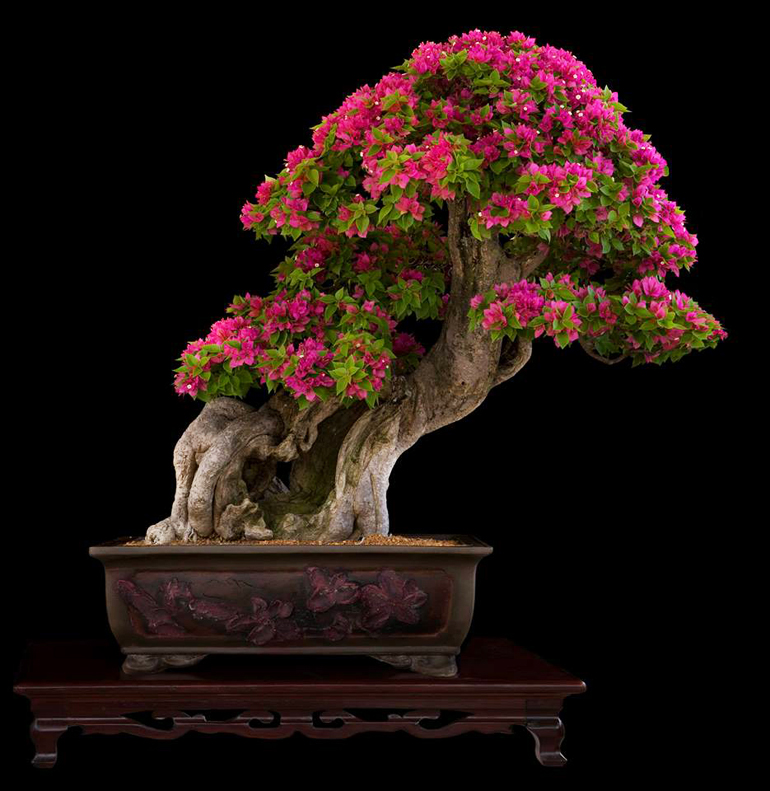
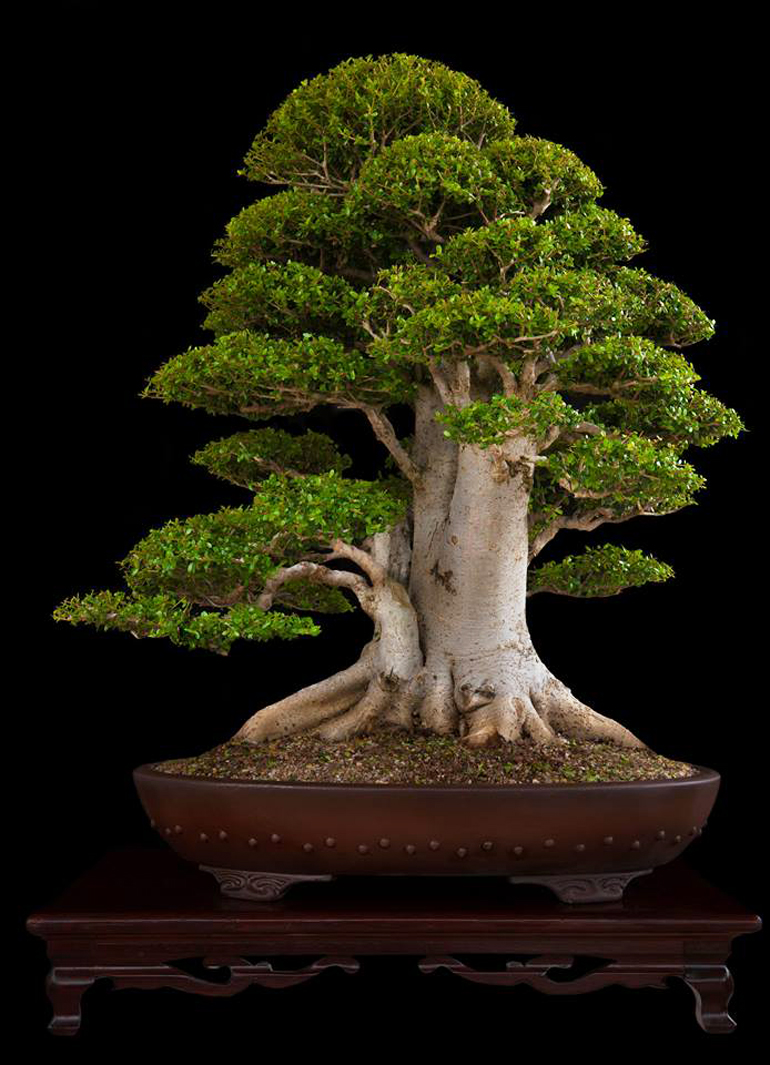
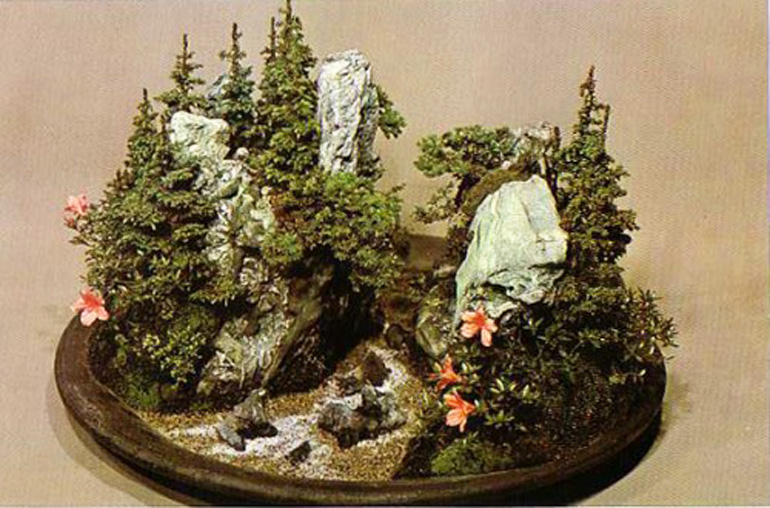 Enchanted lands is another in a series of plantings from
 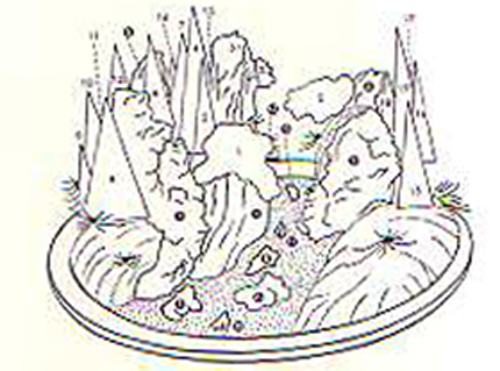 This diagram is designed to give you a little better idea of the layout and relationship of the elements. The trees are numbered, but your eyes are much better than mine if you can distinguish them.
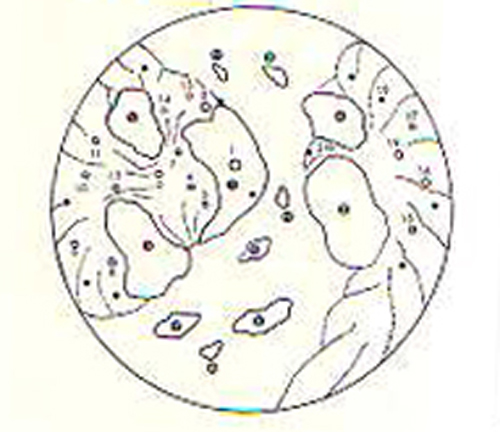 This bird’s eye view shows the placements of the rocks and footprint of the hills. Yes, the tray is completely round. Round tray-style pots this size are very unusual. You’ll see extra large ovals and rectangles for sure, but when was the last time you saw a monster round tray-style pot?

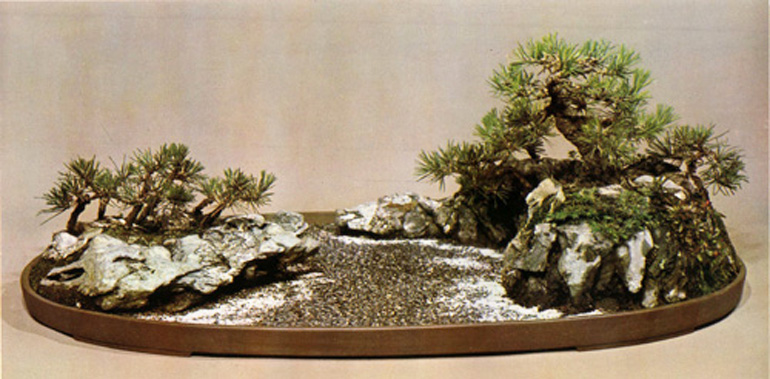 Peaceful Lagoon, our third in a series of plantings from
 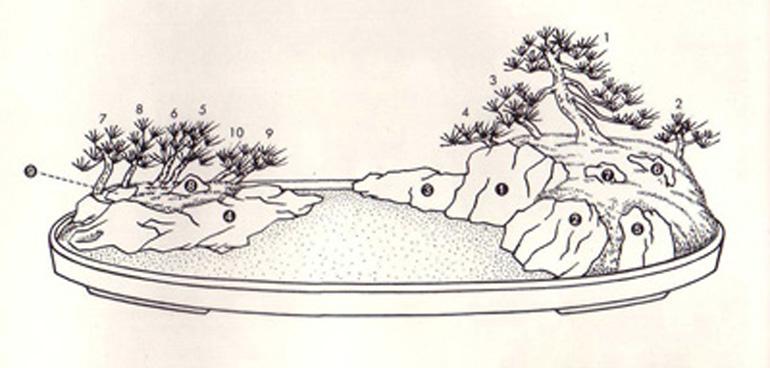 Front schemata. The pot is 37 x 20 inches (94cm x 51cm) unglazed oval by Tokoname. There are 10
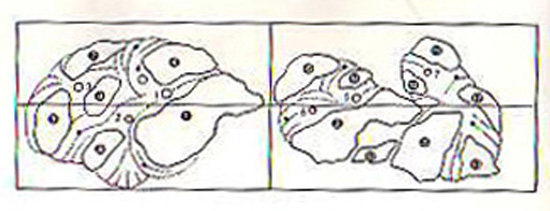
 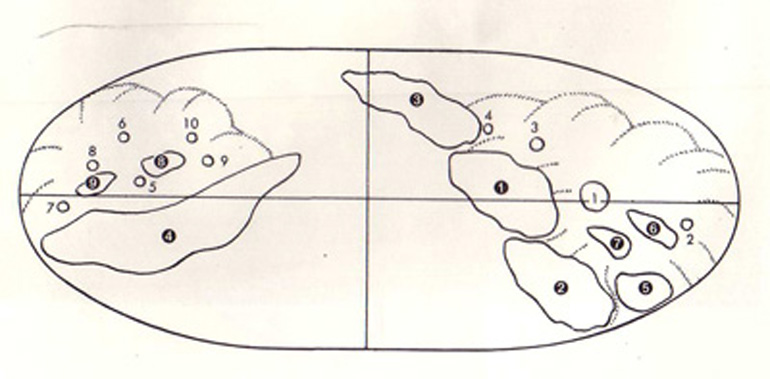 Bird’s eye view. In this view it’s easy to get the big picture; that’s the edge of the ocean in the back, just a hint of something vast. The lagoon is almost centered on the front of the pot, but that’s not a problem, as its banks are uneven and the land mass on the right is very strong and dynamic, which prevents the whole planting from becoming too peaceful (ie static).