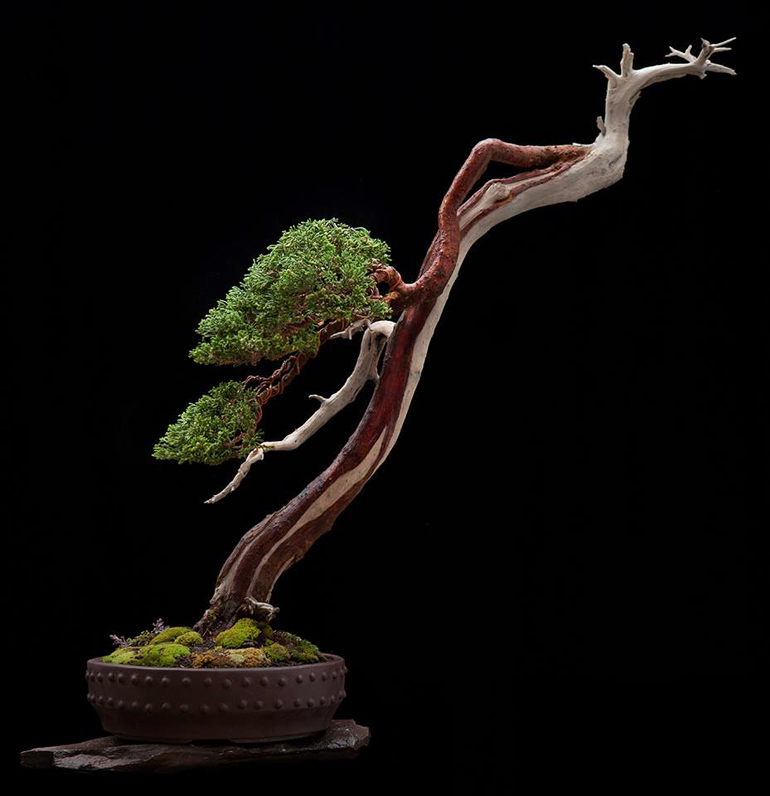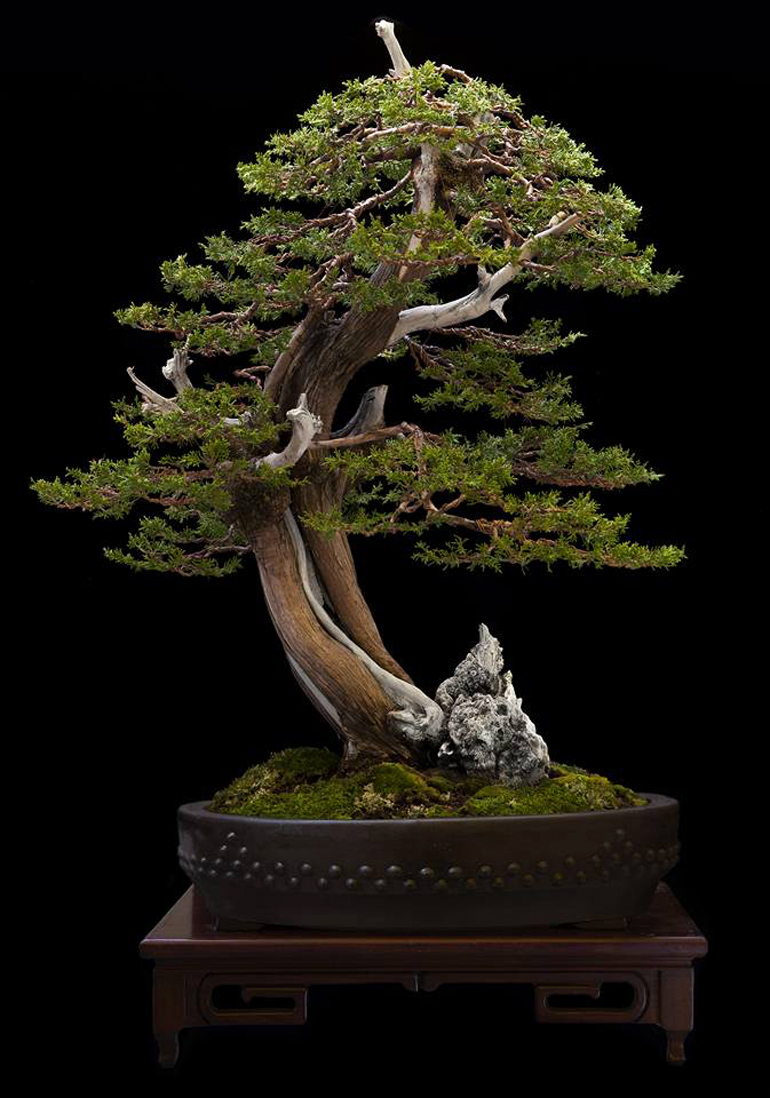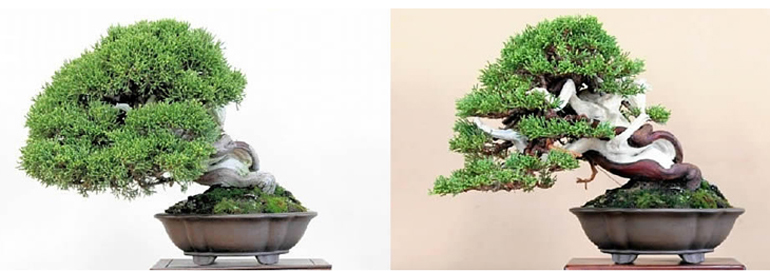
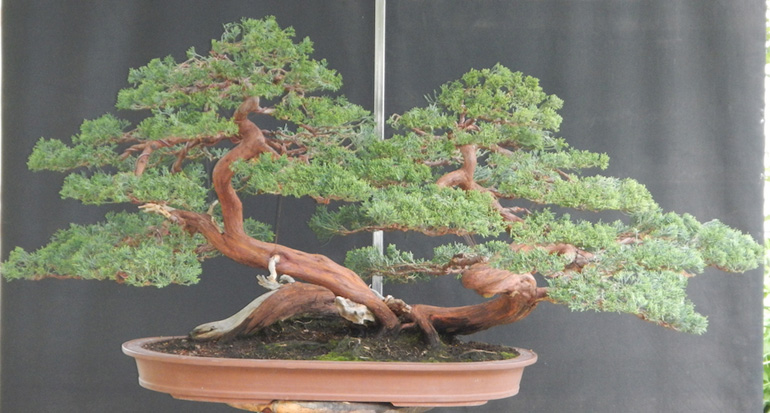
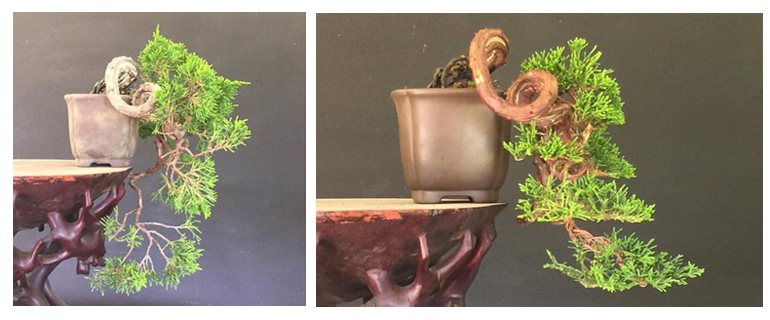
We found these two photos at Bonsai Shikoku. All the text is Japanese and there are no intermediate photos, so what you see is what you get. At a glance you can see that there have been two major changes. First, the foliage has been thinned in order to expose most of the trunk and some of the branching. This allows for an unobstructed view of the deadwood and the lower sections of the living veins. The other obvious change is the result of meticulous cleaning and brightening of the deadwood and living veins. Here's an excellent video if you'd like to explore some techniques used in this process.
Continuing with our recent Before and After theme, we’ve got couple good ones for you. Both are from Bonsai Shikoku. The Shimpaku juniper above came with untranslated Japanese text, so you’re stuck with my comments, though we do provide a link to an excellent video on treating deadwood and living veins.
The Japanese black pine below has English text, so we’ll dispense with my comments and go straight to the source. Enjoy!
Continued below…
OKATSUNE TOOL SPECIAL ENDS TOMORROW
Deep Discounts on Every Okatsune Tool
by far the lowest prices we’ve ever offered
for our selection of these remarkable bonsai & garden tools
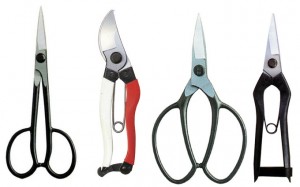 the favorite of Japanese Professionals
Okatsune cut like butter and last forever
Our supply of Okatsune tools is running low
so we have to end this special tomorrow (Saturday) at Noon
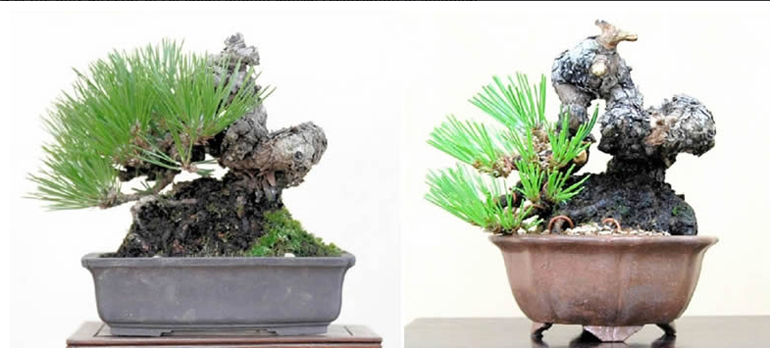
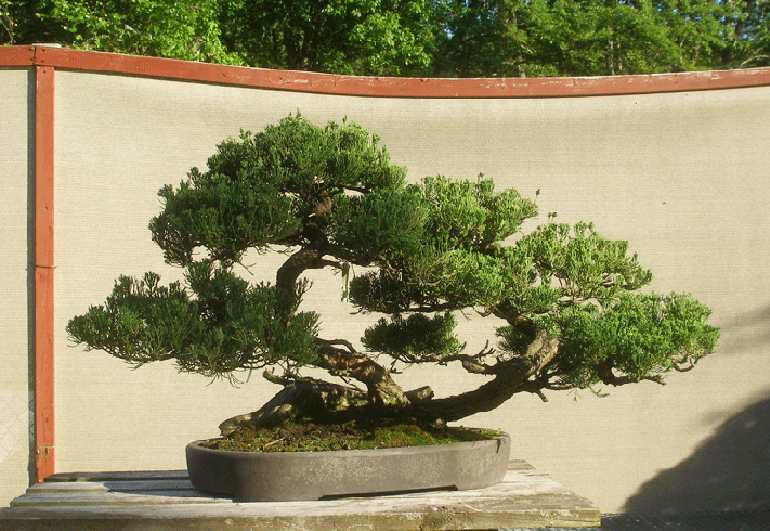
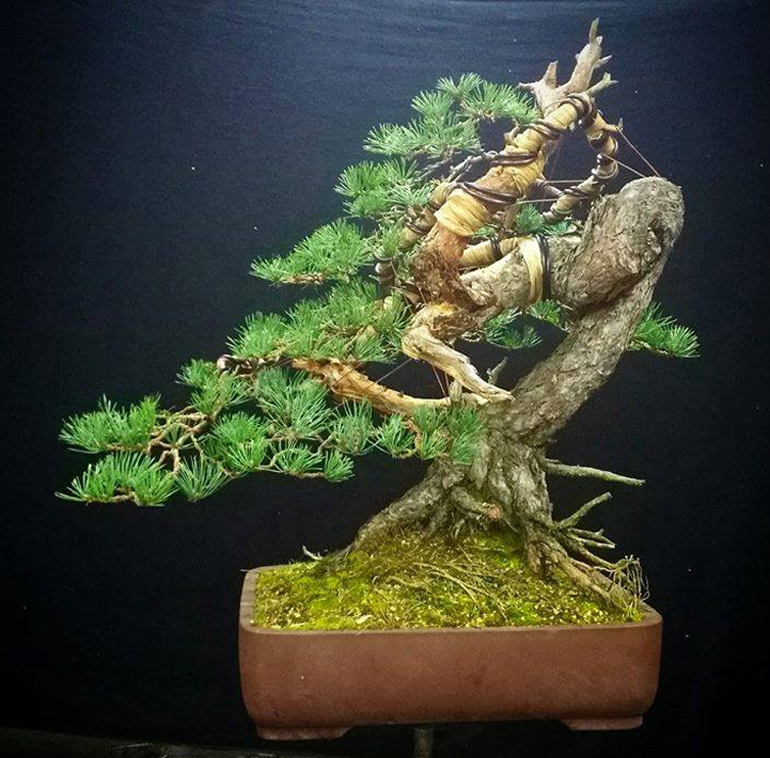
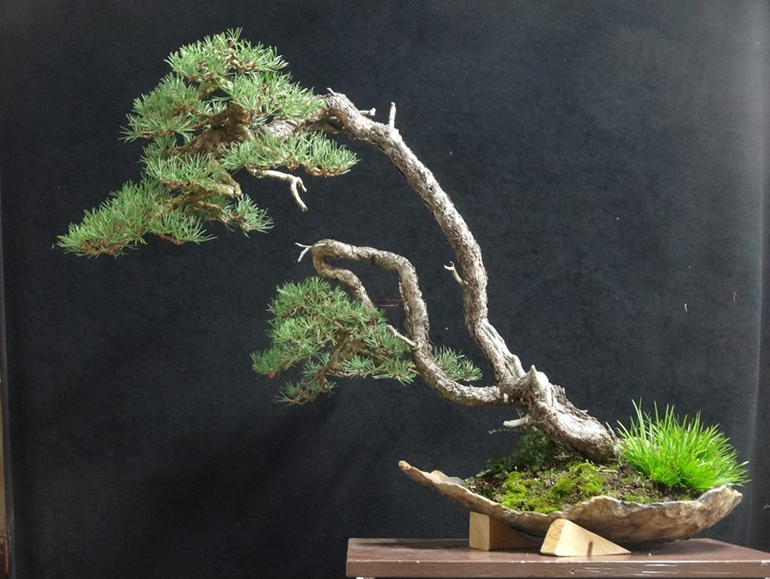
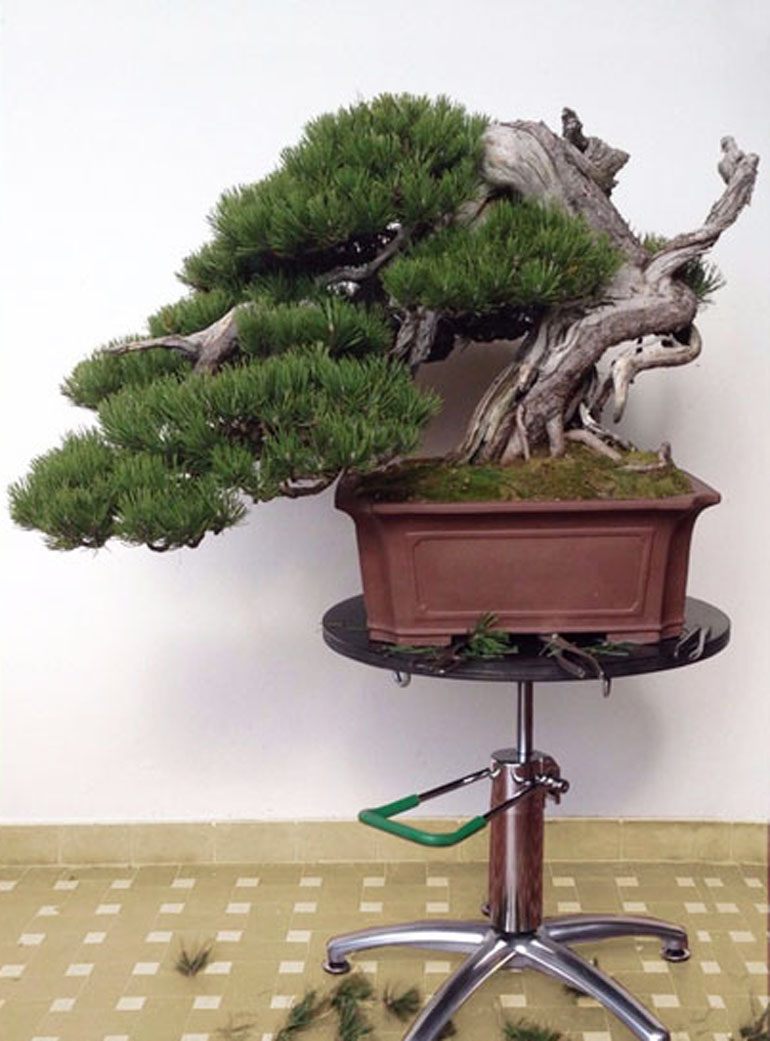
These photos are also from Bonsai Shikoku, but this time there's English text, as follows... "Artists adapt trees once in 4 to 5 years. The main purpose of it is to maintain a good size and to receive the sunlight by cutting the branches.

"This time he adapted a Misho (grown from seed) Kuromatsu (Japanese black pine) which is about 40 years old. A long time has passed since the last adaptation. The tree's branches and needles were too long and the balance with trunk was bad. He felt the branch on the left is too big against the trunk on the right.

"He cut the long branch and it allowed the trunk to be seen. He also showed us the technique to make Jin with the cut branch by knuckle cutters and chisels...." There's more here.
Speaking of Junipers and Pines…
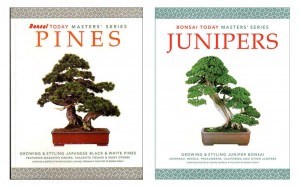 This set of our two most popular Masters Series books
(list price is 64.90)
is now on Special for only 35.00
–
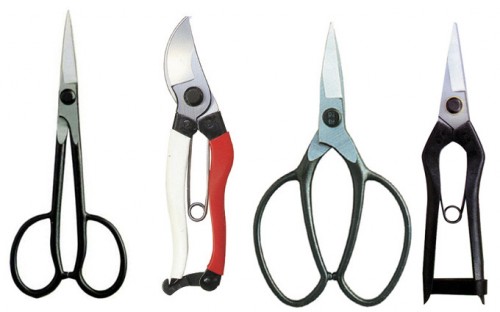 the favorite of Japanese Professionals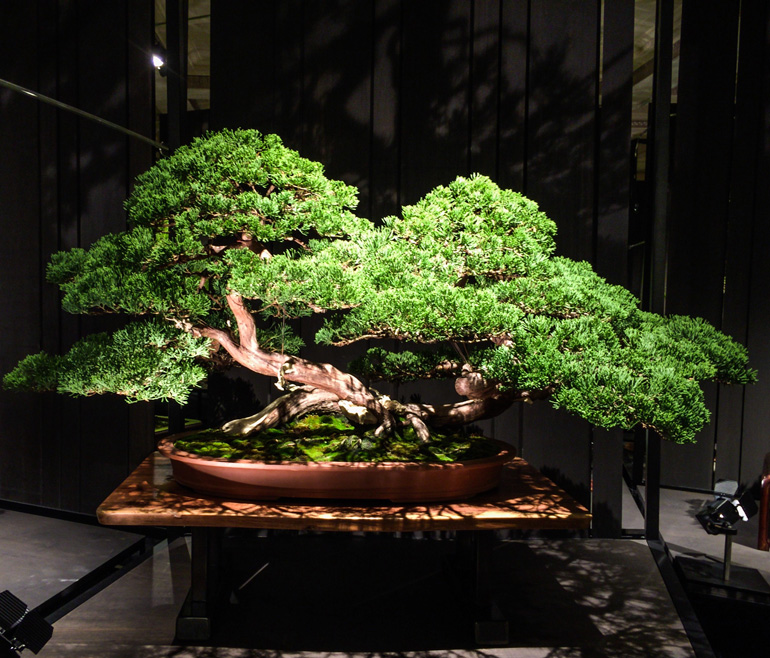
 2009. This is the oldest photo of the tree Michael sent. He bought it in the mid-eighties, so plenty of time had elapsed by the time this photo was taken.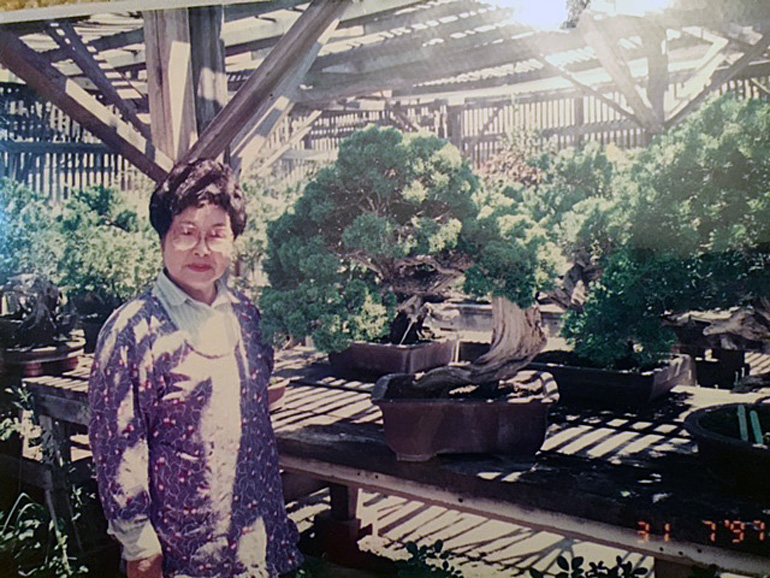
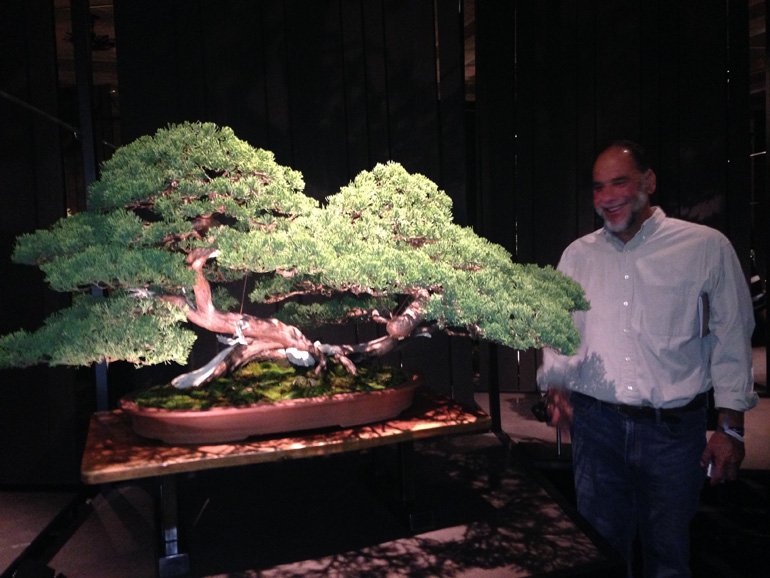

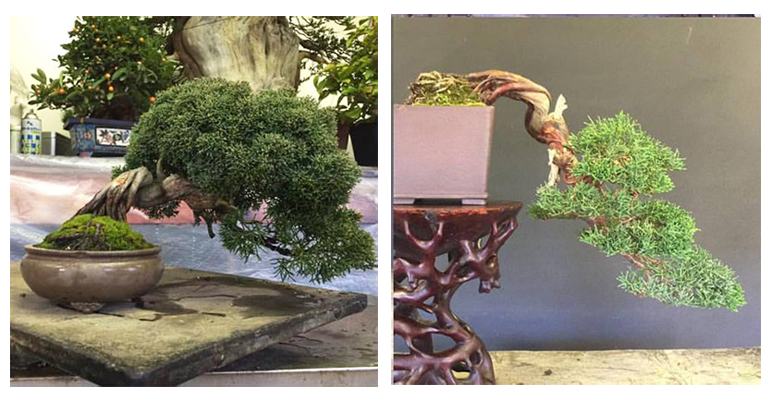 Of the three before and after photos shown here, this is my favorite. The transition from a clunky, overgrown and unbalanced semi cascading bonsai to an elegant fully cascading tree is radical and quite impressive. If you didn't know, you might never guess it's the same tree.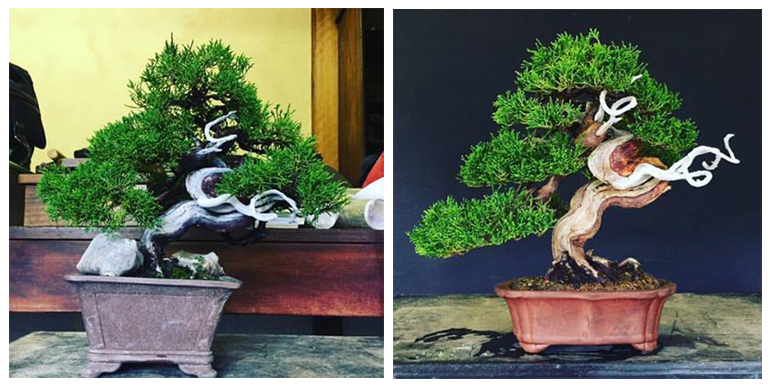
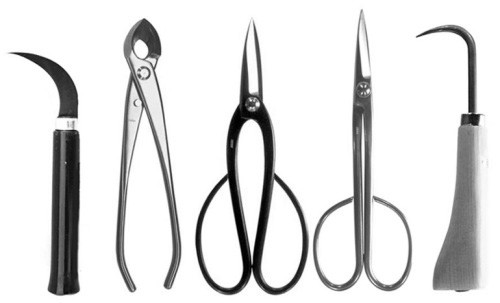 Koyo – a leading name in Japanese Bonsai Tools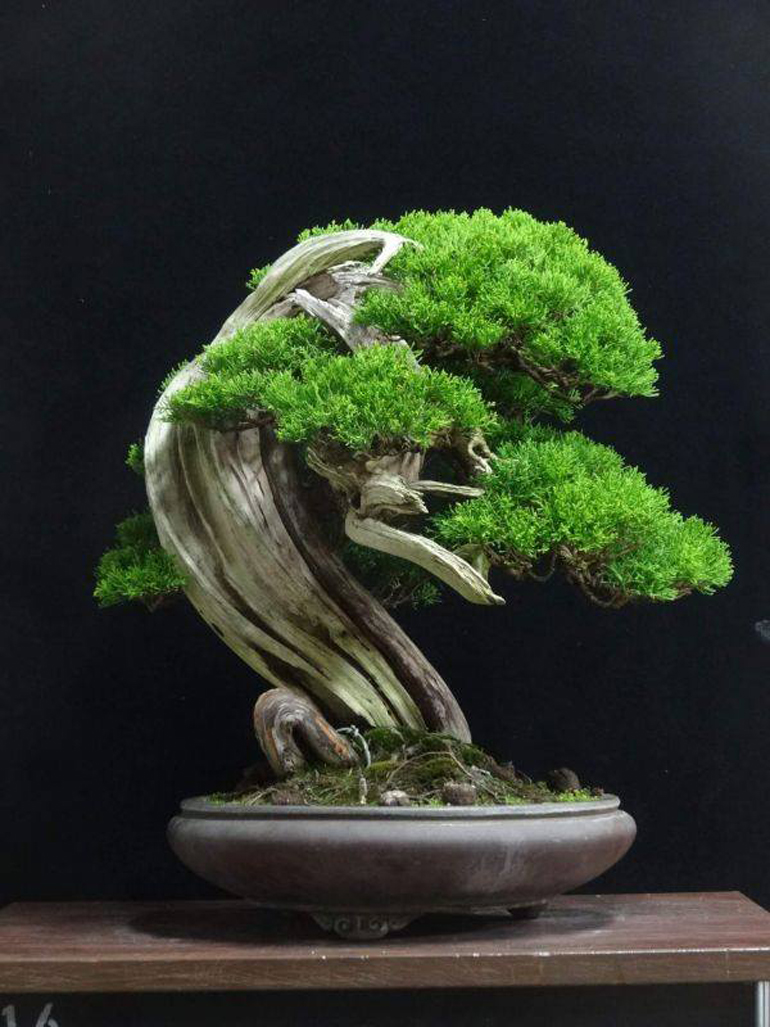
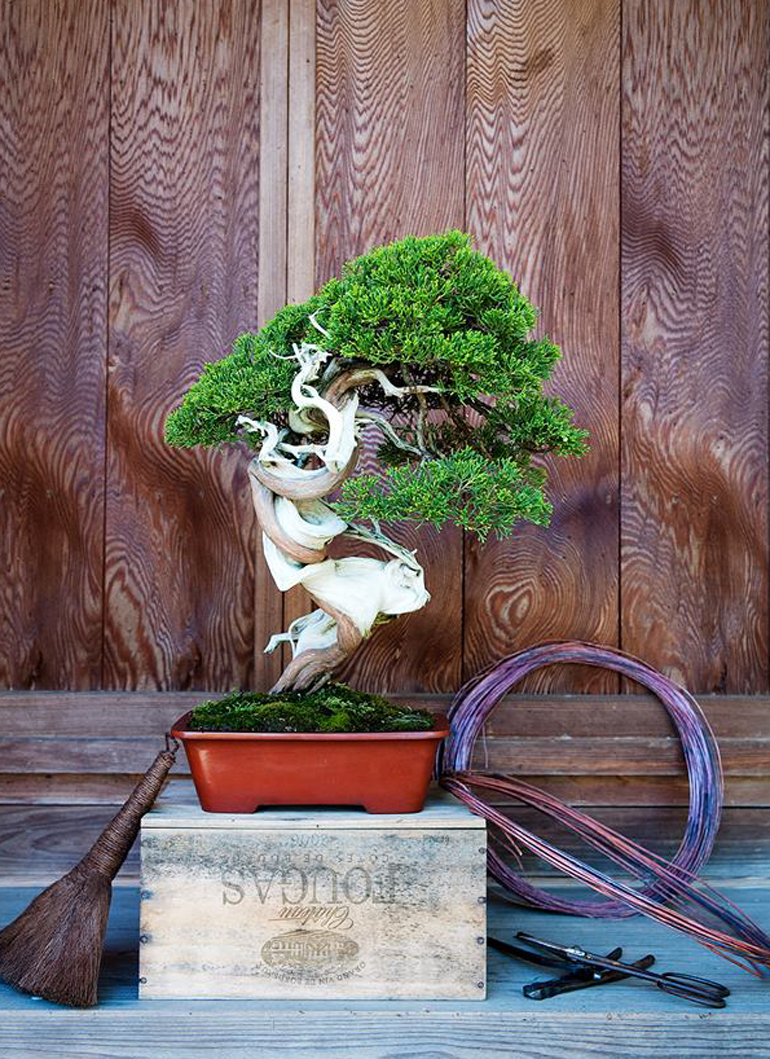
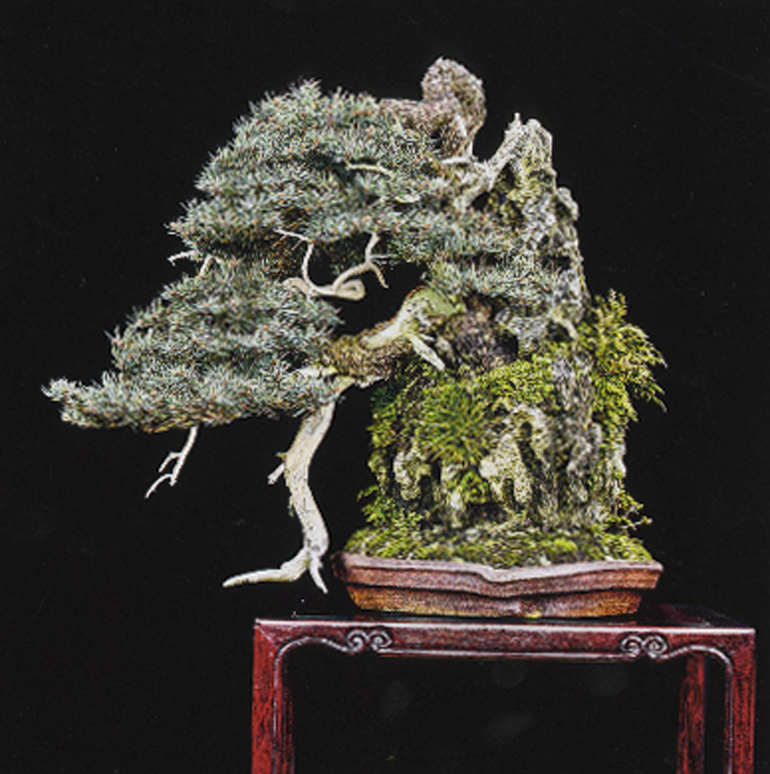
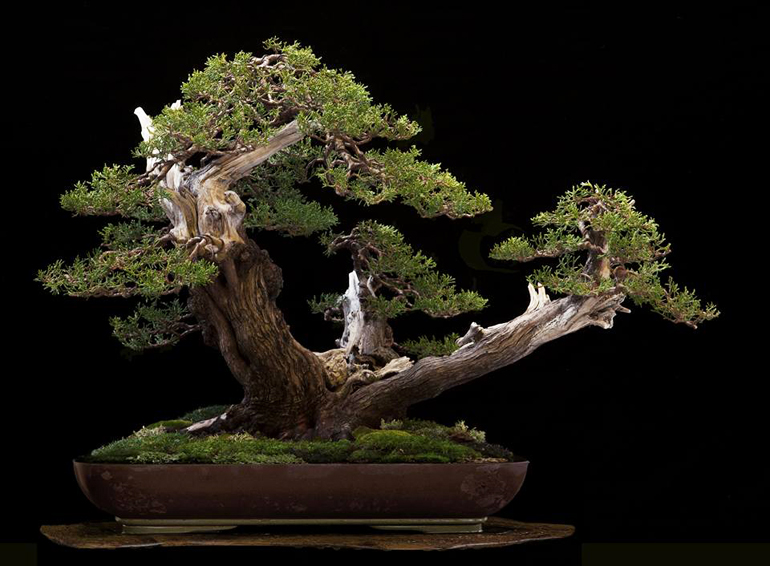
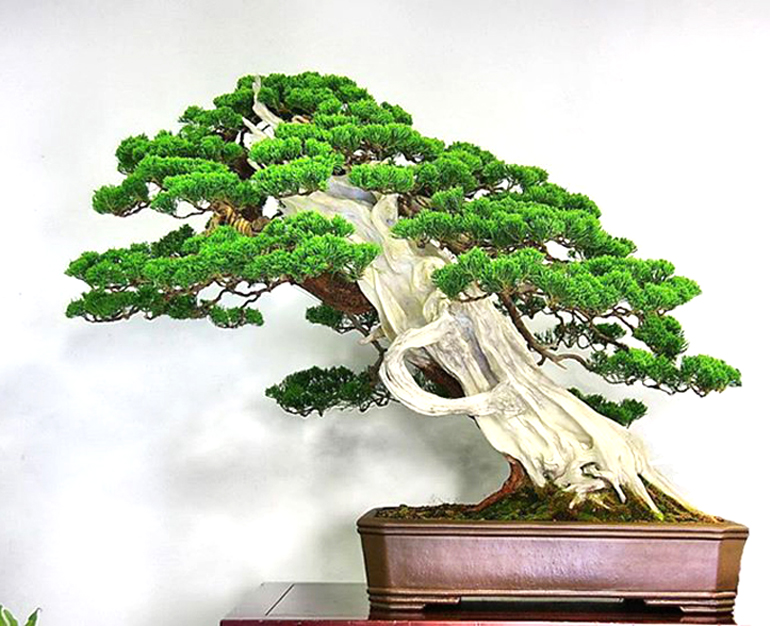 I think this tree deserves some attention. Especially the massive shari (trunk deadwood) with its protruding handle and only a hint of a living vein (peeking out lower left and upper left). Then there's the foliage which is somewhat groomed but still free-flowing; giving the tree an informal feel. It might also be worth mentioning that it's slanting style. You don't see nearly as many quality slant style bonsai as you do upright bonsai. Here's the caption that accompanies this photo... "Juniperus (no species given) by Salvador De Los Reyes. Approximately 80 years of age. Added by Gustavo Celayes.
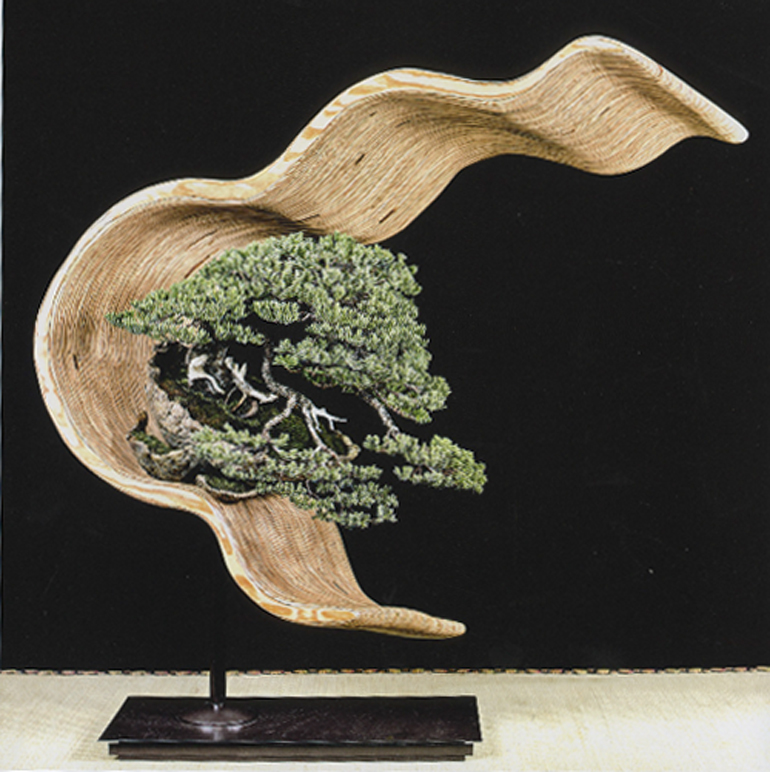
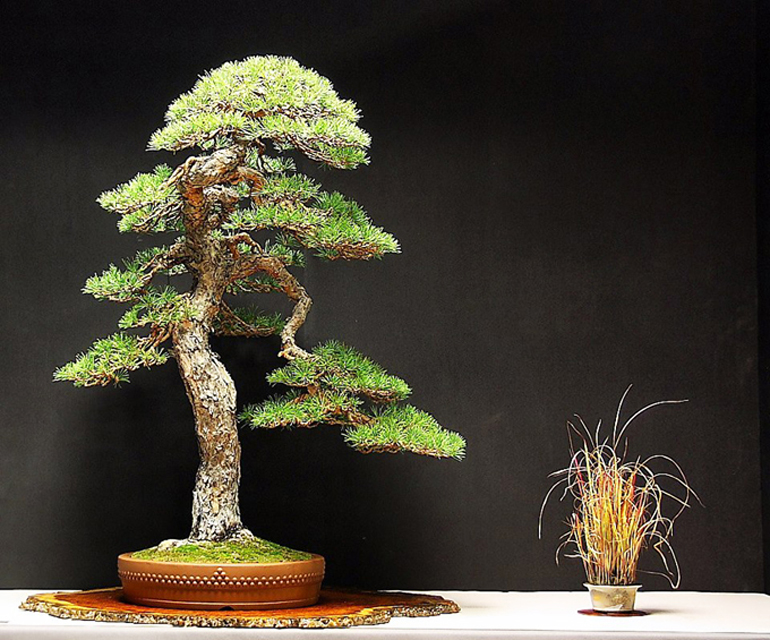 Beautiful tree, beautiful pot, beautiful companion, beautiful arrangement and excellent photo. I believe Salvador de los Reyes might have taken the photo, but I'm too busy -aka impatient- to suffer the aggravation of researching right now (especially in Spanish), so if anyone knows the whole story.... I do know (or believe I know) that the tree belongs to
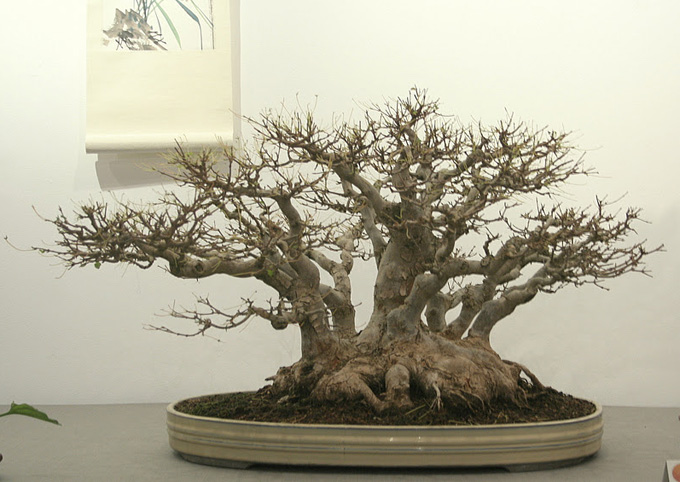
 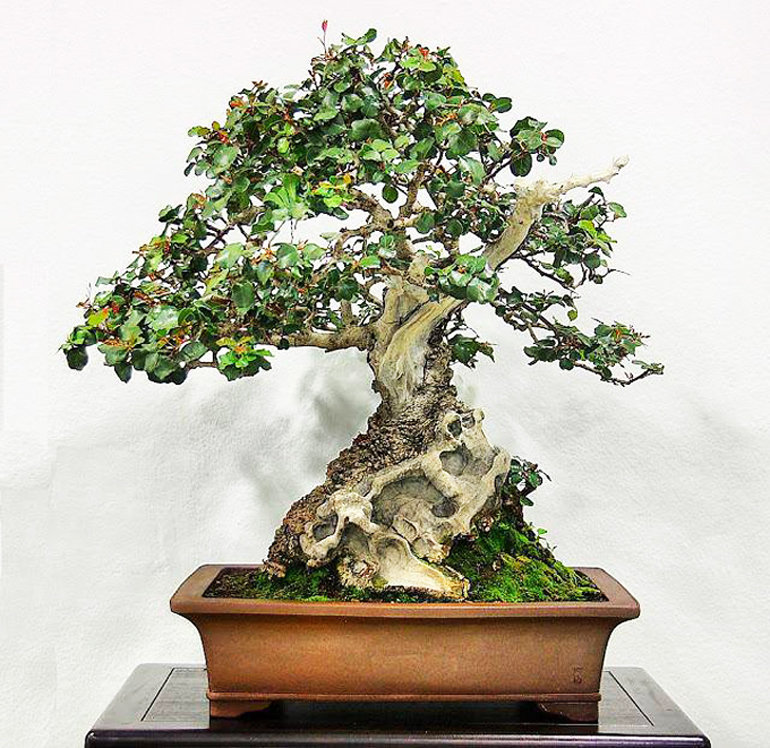 Have you ever seen a Carob bonsai? I think I have, but maybe just once before and maybe it was this very tree (memory has it's limits). Here's the caption
 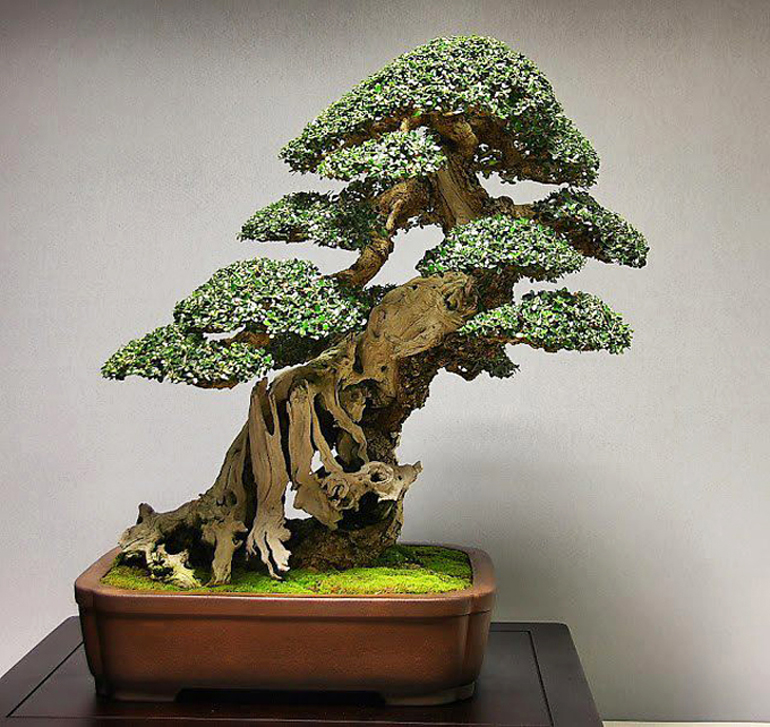 This somewhat overly groomed tree with its magnificent see-through trunk is also from Salvador de los Reyes facebook photos. Is it an olive? The caption says: Excelente obra maestra propiedad de
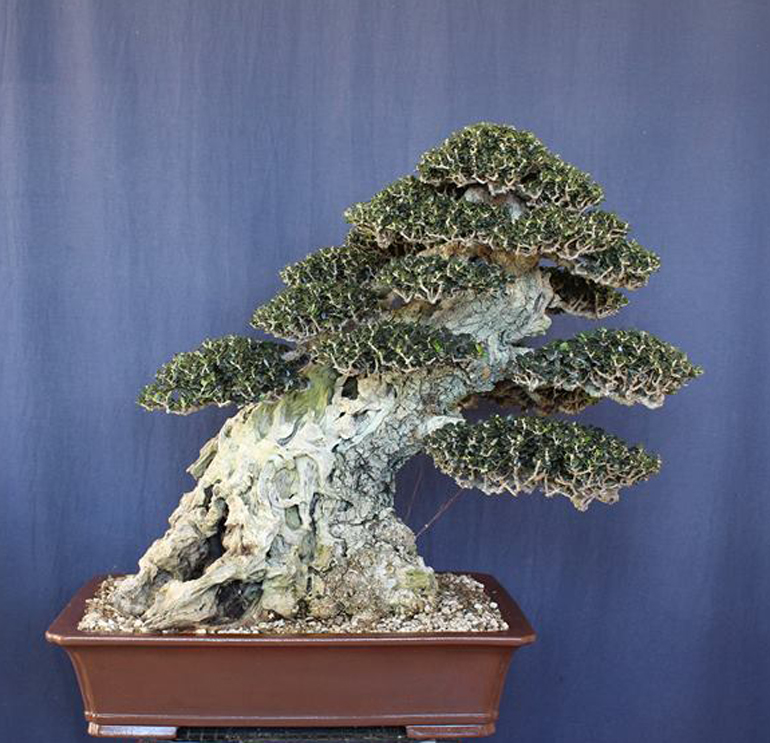
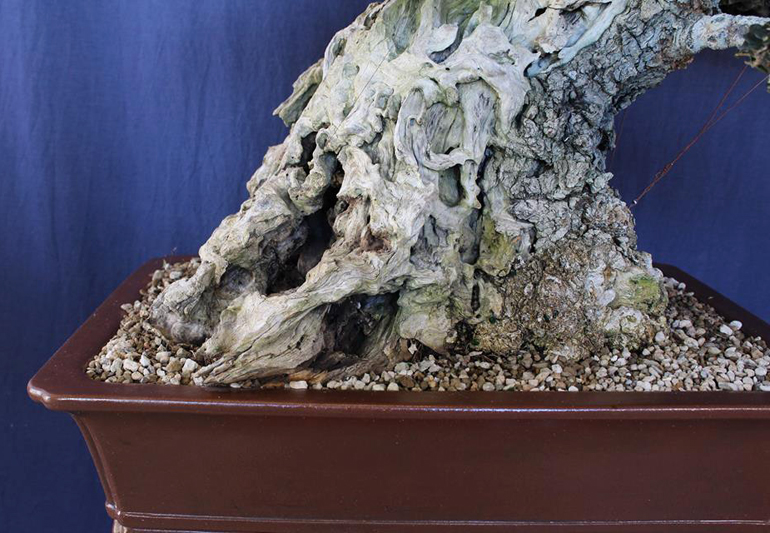
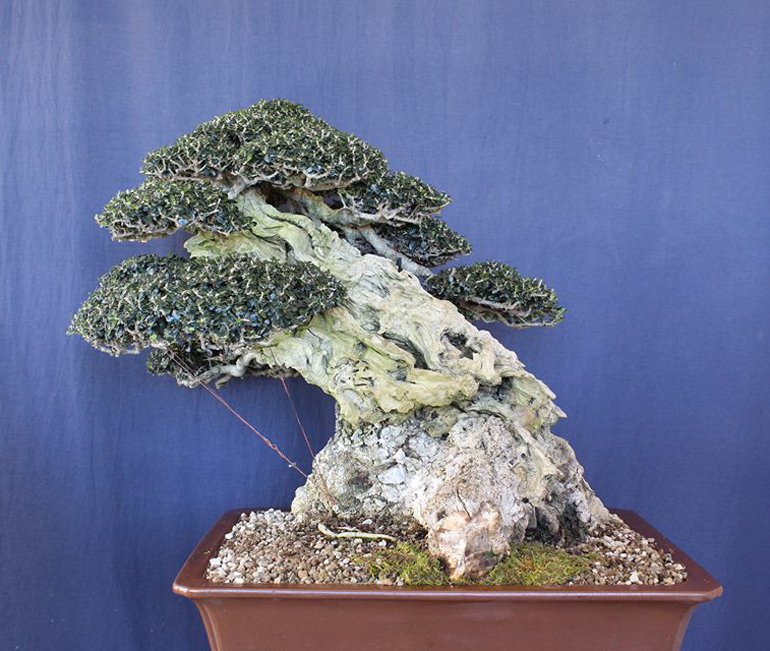
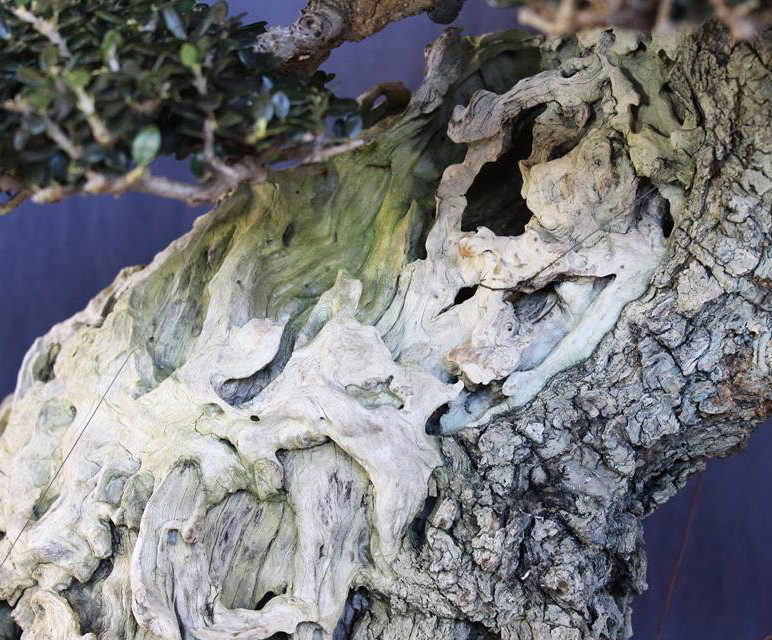
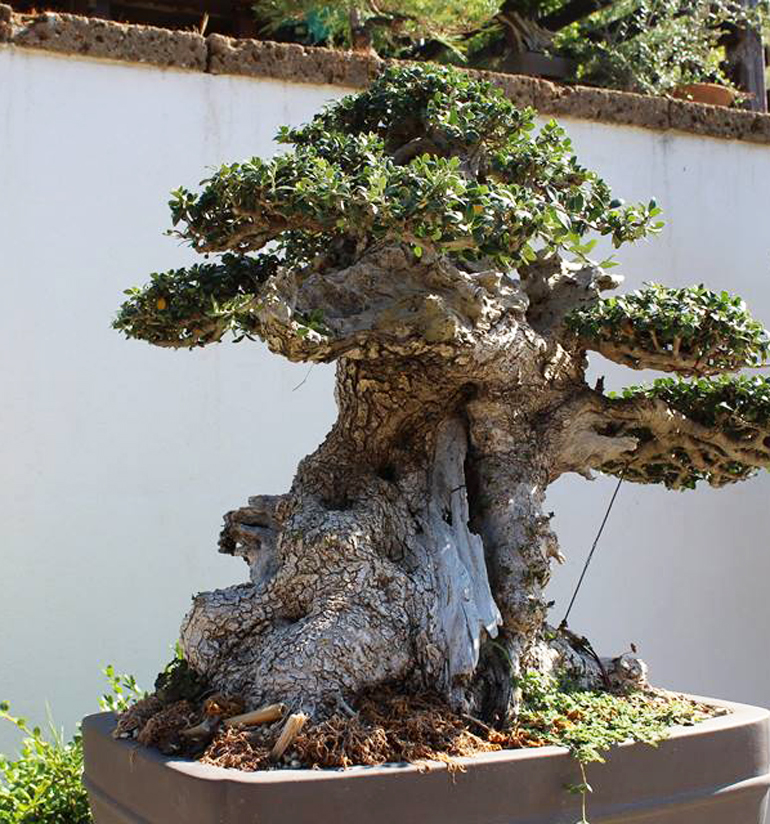
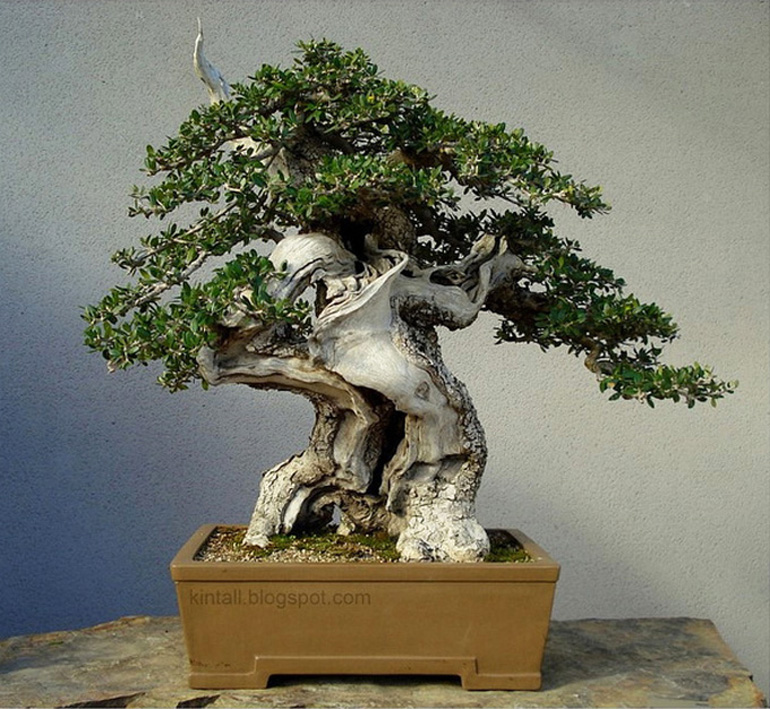 Old European olives are often full of character as well as muscle, and this one is no exception. I believe the tree belongs to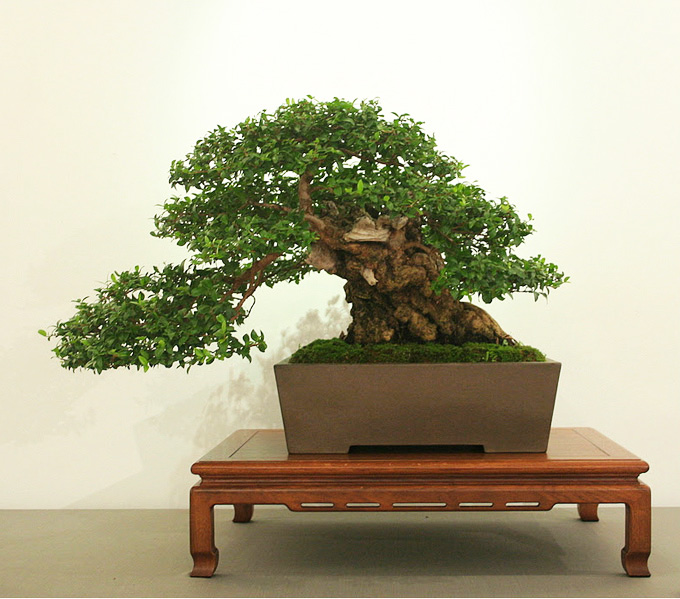
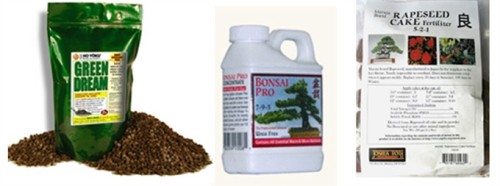 Most people don’t feed their bonsai nearly enough